
Why Choose Herbal Skincare: Benefits and Real Results


If you’ve been wondering why choose herbal skincare over conventional options, you’re not alone. More people are reaching for plant-based formulations to manage sensitive skin, avoid harsh chemicals, and support long-term skin health. But “natural” is not a regulated claim, and not every herbal product delivers on its promises. This article cuts through the marketing noise with evidence-backed insights, regulatory clarity, and practical guidance so you can make informed choices about botanical skincare products that genuinely support your skin.
Key Takeaways
Point | Details |
“Natural” isn’t automatically safer | Herbal products must meet the same safety standards as synthetic cosmetics in most regulatory frameworks. |
Some botanicals have clinical backing | Calendula extract at 1% concentration has direct trial evidence for improving skin hydration and barrier recovery. |
Consumers choose herbal for real reasons | Avoiding parabens, sulfates, and artificial fragrances is a documented motivation, not just a trend. |
Match ingredients to your skin goals | Use evidence-based ingredients like calendula for barrier repair or neem for acne rather than generic “herbal” blends. |
Greenwashing is a real risk | Look for substantiated claims and transparent ingredient lists, not just the word “herbal” on the label. |
Why choose herbal skincare: what you need to know first
“Herbal skincare” is a popular term, but the recognized industry and regulatory vocabulary is botanical cosmetics or plant-derived topical formulations. Understanding this distinction matters because it shapes how products are evaluated for safety and efficacy.
In the United States and across the EU, there is no separate legal category for natural or herbal cosmetics. Every product, regardless of whether its ingredients come from a plant or a lab, must meet the same safety and labeling standards. In the EU, this falls under Regulation (EC) No 1223/2009. In the U.S., the FDA applies cosmetic regulations across the board. Claims like “natural,” “herbal,” or “pure” must be truthful and substantiated. They are not legal shields.
What this means for you practically:
Safety assessments are risk-based, not origin-based. A plant-derived compound can still cause irritation or allergic reactions.
A product labeled “herbal” is not automatically tested for efficacy. The burden falls on you to evaluate the evidence.
Transparency in ingredient lists matters more than front-label marketing claims.
“Free from” claims (paraben-free, sulfate-free) are more verifiable than vague “natural” language.
Pro Tip: Check the INCI (International Nomenclature of Cosmetic Ingredients) list on any herbal product. Latin plant names like Calendula officinalis or Azadirachta indica tell you exactly what’s in the formula, regardless of how the front label is worded.
Scientifically supported benefits of herbal ingredients
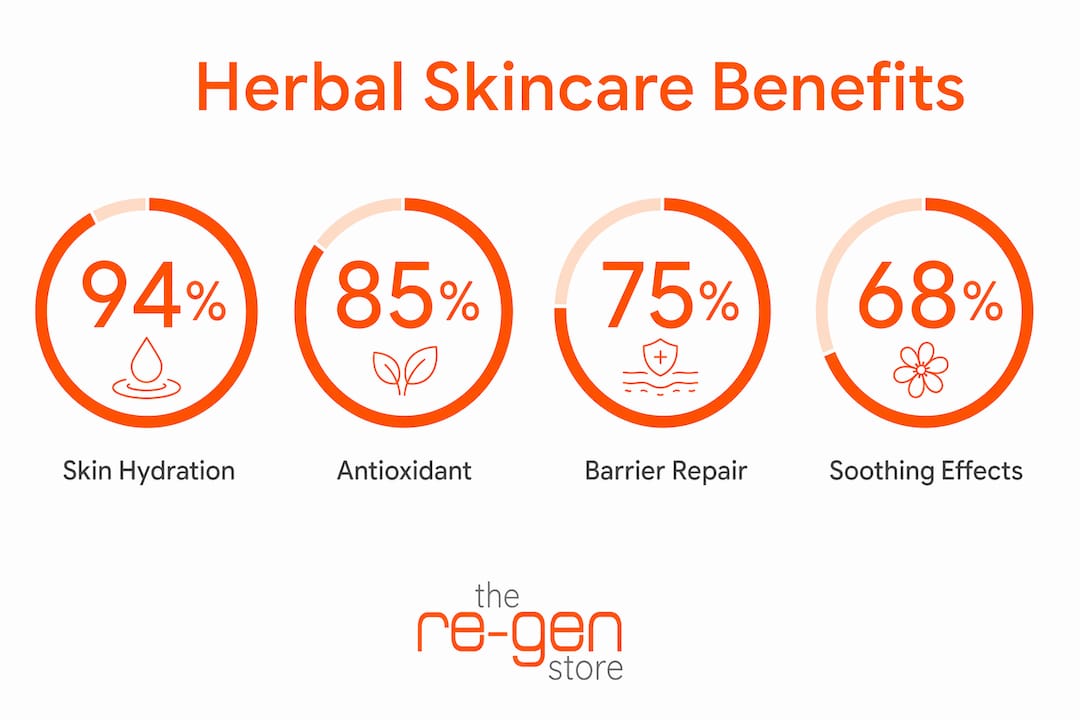
Here is where the conversation gets genuinely interesting. Once you move past marketing language, specific botanical ingredients have real, measurable effects on skin health.
Herbal Ingredient | Key Benefit | Evidence Level |
Calendula officinalis | Barrier hydration, irritant dermatitis recovery | Randomized clinical trial |
Phyllanthus englerii | Antimicrobial activity | In-vitro with preliminary safety data |
Green tea polyphenols | Antioxidant protection, collagen support | Multiple studies |
Turmeric (curcumin) | Anti-inflammatory, skin tone support | Lab and clinical research |
Neem (Azadirachta indica) | Acne-related antimicrobial | Traditional use with growing clinical interest |
Calendula stands out from most botanicals because it has direct clinical proof. A double-blind randomized trial found that 1% calendula extract in a topical cream significantly decreased transepidermal water loss and improved skin hydration following irritant exposure. That’s not anecdotal. It’s measurable barrier recovery under controlled conditions.

Beyond calendula, phytochemical compounds in effective herbal formulations include alkaloids, phenols, flavonoids, and terpenoids. These molecules contribute to skin-protective, antimicrobial, and anti-inflammatory effects at the cellular level. Phyllanthus englerii leaf extracts, for example, showed moderate antimicrobial activity in-vitro, with preliminary safety data supporting topical application.
Antioxidant-rich ingredients like green tea and rosehip support collagen synthesis and protect against free radical damage from UV exposure and pollution. These aren’t just nice-to-haves. Oxidative stress is a primary driver of visible skin aging.
Pro Tip: When evaluating a botanical ingredient’s efficacy, look for randomized controlled trial data or at minimum peer-reviewed in-vitro findings. Anecdotal claims and ingredient spotlights on brand websites are not evidence.
Practical reasons people switch to herbal products
Understanding the science is one thing. Understanding why real people make the switch to plant-based skincare is equally important because those motivations are often well-founded.
Consumer preference for herbal skincare is driven significantly by ingredient transparency and a desire to avoid synthetic additives that have raised concern among dermatologists and researchers. The most commonly cited reasons include:
Sensitivity reduction. Many herbal formulations are gentler on reactive skin because they skip artificial fragrances, which are among the most common contact allergens.
Chemical avoidance. Parabens, sulfates, and synthetic preservatives are linked to skin irritation in some individuals, especially with daily use over years.
Systemic safety. Botanical products are generally processed more easily by the body and do not carry the systemic accumulation risks associated with certain synthetic compounds.
Sustainability. Growing consumer demand for eco-friendly packaging, cruelty-free testing, and minimal ingredient lists reflects broader wellness values, not just skin concerns.
Ingredient legibility. People increasingly want to recognize what they are putting on their skin. A short list of plant-derived components feels more trustworthy than a 30-item synthetic formula.
One important nuance: choosing herbal skincare should never be based solely on the label. A well-formulated plant-based product outperforms a poorly formulated one that simply carries the “herbal” badge. The combination of genuine botanical ingredients and sound formulation science is what delivers results.
How to select herbal skincare that actually works
Switching to plant-based products is straightforward once you know what to look for. Here is a practical framework to guide your decisions.
Identify your skin goal first. Are you managing dryness, acne, sensitivity, or aging? Each condition responds to different botanical ingredients. Calendula is ideal for barrier repair and soothing. Neem suits acne-prone skin. Green tea works well for oxidative protection.
Verify the ingredient concentration. An ingredient listed at the bottom of a formula may be present in trace amounts. Look for products where active botanicals appear in the first half of the INCI list.
Check for substantiated claims. Regulatory frameworks require that claims be truthful. If a product promises clinical-level results, ask whether trial data backs that claim. Calendula at 1% has it. Many others do not.
Expect gradual improvement. Herbal skincare generally supports recovery and maintenance over time rather than producing overnight changes. Consistency over four to eight weeks is a fair trial period.
Research guides like healing herbs for skin can help you match specific botanicals to specific conditions rather than guessing from product packaging alone.
Avoid greenwashing signals. Vague terms like “natural essence,” “botanical blend,” or “pure formula” without specific ingredient names are red flags. Credible brands name their plants.
My take on the herbal skincare conversation
I’ve spent years reviewing natural health and skincare products, and the most common mistake I see people make is binary thinking. Either they distrust herbal products entirely because “it’s not proven,” or they trust every plant-based label without question.
Both positions get it wrong. What I’ve found is that the evidence for specific botanicals, particularly calendula and plant-derived antimicrobials, is genuinely solid when applied correctly. At the same time, I’ve seen products with impressive herbal branding that contain a token drop of botanical extract and little else of value.
My honest view: traditional botanical knowledge combined with modern formulation science produces real results. But you have to evaluate each product critically, not the category as a whole. Herbal skincare should also complement good skin health habits, not replace them. Hydration, sun protection, and avoiding known irritants still form the foundation. The right plant-based products build on that foundation rather than substituting for it.
— Kyle
Support your skin with plant-based solutions from Theregenstore
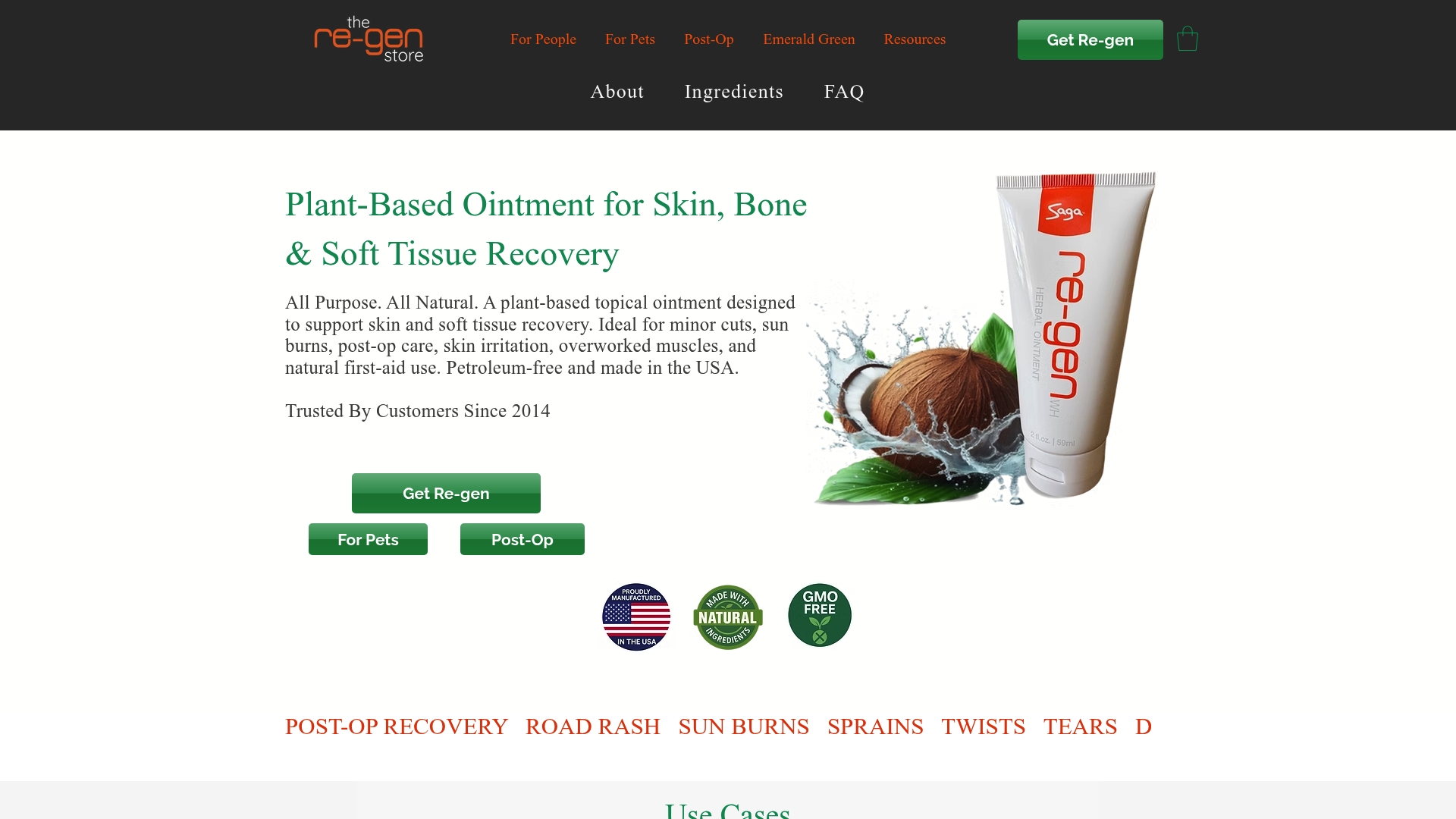
If you’re ready to put these principles into practice, Theregenstore offers plant-based topical formulations built around evidence-backed herbal ingredients. The Re-gen ointment is a petroleum-free, chemical-free option designed to support skin recovery from cuts, burns, irritation, and post-procedure healing. It is formulated without parabens or synthetic preservatives, which is exactly the kind of transparency that makes a product worth considering.
You can explore plant-based wound treatment options on the site, or learn how to speed up natural healing with practical guides that connect ingredient science to real recovery outcomes. Theregenstore positions itself as a trusted resource for those who want herbal skin support grounded in real formulation integrity.
FAQ
What makes herbal skincare different from regular skincare?
Herbal skincare uses plant-derived ingredients as its active components rather than synthetic compounds, though both types must meet the same safety and labeling regulations. The practical difference is often fewer artificial additives and a more transparent ingredient list.
Is herbal skincare effective for sensitive skin?
Yes, many plant-based formulations are gentler on reactive skin because they avoid artificial fragrances and synthetic preservatives, which are among the most common contact allergens. Clinical evidence supports specific ingredients like calendula for barrier recovery in irritant-prone skin.
Is “natural” the same as “herbal” on a skincare label?
Not always. “Natural” and “herbal” are marketing terms with no strict legal definition in most countries. Always check the ingredient list for specific botanical names rather than relying on front-label language.
How long does it take to see results from herbal skincare?
Most plant-based formulations support gradual improvement rather than rapid change. A consistent trial period of four to eight weeks gives a fair assessment of whether a product is working for your skin condition.
Can herbal skincare replace medical treatment for skin conditions?
No. Herbal skincare can complement skin health and support recovery, but it is not a substitute for dermatological care when a medical condition requires diagnosis or prescription treatment. Use it as a supportive tool alongside professional guidance.
Recommended
Comments