
The Role of Skin Barrier Repair in Skin Health
- Sunny

- May 19
- 7 min read
Your skin barrier does far more than hold moisture in. It actively defends against pathogens, regulates inflammation, and maintains the biological conditions your skin needs to stay healthy. The role of skin barrier repair goes well beyond applying a moisturizer after a hot shower. Damage runs deeper than surface dryness, and repair requires a specific combination of lipids, time, and the right habits. If you have a skin condition, a wound, or a compromised complexion that never quite recovers, understanding what your barrier actually needs could change everything about how you care for it.
Table of Contents
Key takeaways
Point | Details |
Lipid ratio matters | Effective repair requires ceramides, cholesterol, and fatty acids in a 3:1:1 molar ratio, not ceramides alone. |
TEWL signals damage | Transepidermal water loss above 25 g/m2/h indicates barrier dysfunction and is a reliable repair progress metric. |
Actives slow repair | Retinols, AHAs, and BHAs degrade barrier lipids and worsen damage when used during a compromised repair phase. |
Repair takes weeks | Biology sets the timeline for recovery. Patience and a simplified routine produce better results than aggressive treatment. |
pH balance is critical | Maintaining a skin pH around 5.5 supports enzyme function and is often the most overlooked step in barrier recovery. |
The role of skin barrier repair and how it works
Your skin barrier is often described using a “brick and mortar” model. The bricks are corneocytes, flat, protein-filled cells in the outermost layer of the skin. The mortar is a lipid matrix that fills the spaces between those cells. That mortar is what does the real work of protecting you.
The lipid matrix is made up of three main components: ceramides, cholesterol, and free fatty acids. According to dermatology consensus findings, effective barrier function depends on these lipids existing in a 3:1:1 molar ratio, with ceramides making up roughly 50%, cholesterol 25%, and free fatty acids 15 to 25%. Strip out any one of these, and the barrier stops functioning properly.
Transepidermal water loss, or TEWL, is the metric dermatologists use to assess barrier health. In a healthy barrier, TEWL stays below 10 g/m2/h. Once that number climbs past 25, the barrier is clearly compromised. What is reassuring is that targeted lipid treatment can reduce TEWL measurably over a period of weeks, which confirms that the right approach does produce real, trackable results.
Lipid Component | Role in Barrier | Share of Lipid Matrix |
Ceramides | Structural integrity and hydration retention | ~50% |
Cholesterol | Flexibility and fluidity of lipid layers | ~25% |
Free fatty acids | Acid mantle support and antimicrobial defense | 15–25% |
What damages your skin barrier
Barrier disruption rarely comes from a single dramatic event. It builds gradually, often from everyday habits that seem harmless.
The most common causes of barrier damage include:
Over-exfoliation with physical scrubs or acids that remove protective lipids too aggressively
Harsh cleansers that strip the acid mantle and alter skin pH
Overuse of actives like retinol, AHAs, and BHAs, which can degrade the lipid matrix and trigger repeated inflammation cycles
Environmental stressors including dry air, UV exposure, and cold weather
Hot water during cleansing, which dissolves lipids at the surface
The consequences compound quickly. Once the barrier is disrupted, inflammation worsens and the microbiome falls out of balance. Skin becomes reactive. You might notice tightness after washing, a burning sensation when you apply products, redness that was not there before, or persistent flaking that does not respond to more moisturizer. Breakouts that appear in areas you have never had them before are also a warning sign.
The trap many people fall into is treating these symptoms aggressively. More products, stronger actives, more frequent treatments. Each of those responses worsens the underlying damage.

Pro Tip: If your skin feels tight or burns within minutes of cleansing, that is a clear signal your barrier is compromised. Stop all actives immediately and start a simplified repair routine before doing anything else.
The science behind effective repair
Restoring the skin barrier is not about picking the right moisturizer off a shelf. The science of repair centers on recreating the specific biological environment that healthy skin maintains naturally.
The 3:1:1 lipid ratio is the benchmark that separates genuinely effective repair products from those that only feel good. A ceramide-only product, for example, can actually create a brittle barrier because without cholesterol, the lipid layer lacks the flexibility it needs to function. You need all three components delivered together.
Ceramide type also matters more than most products advertise. Longer ceramide acyl chains in the C24 to C30 range improve barrier recovery and hydration retention significantly more than shorter chains in the C16 to C18 range. This is a formulation detail worth checking when evaluating any repair product.
The acid mantle pH, ideally around 5.5, governs the enzyme activity that rebuilds lipids naturally. Alkaline cleansers disrupt this environment and stall repair even when everything else is done correctly.
Pro Tip: A “skin fast” protocol, where you eliminate all actives and use only a gentle cleanser, a lipid-balanced moisturizer, and SPF, gives your natural repair processes the uninterrupted time they need to rebuild the barrier from the inside out.
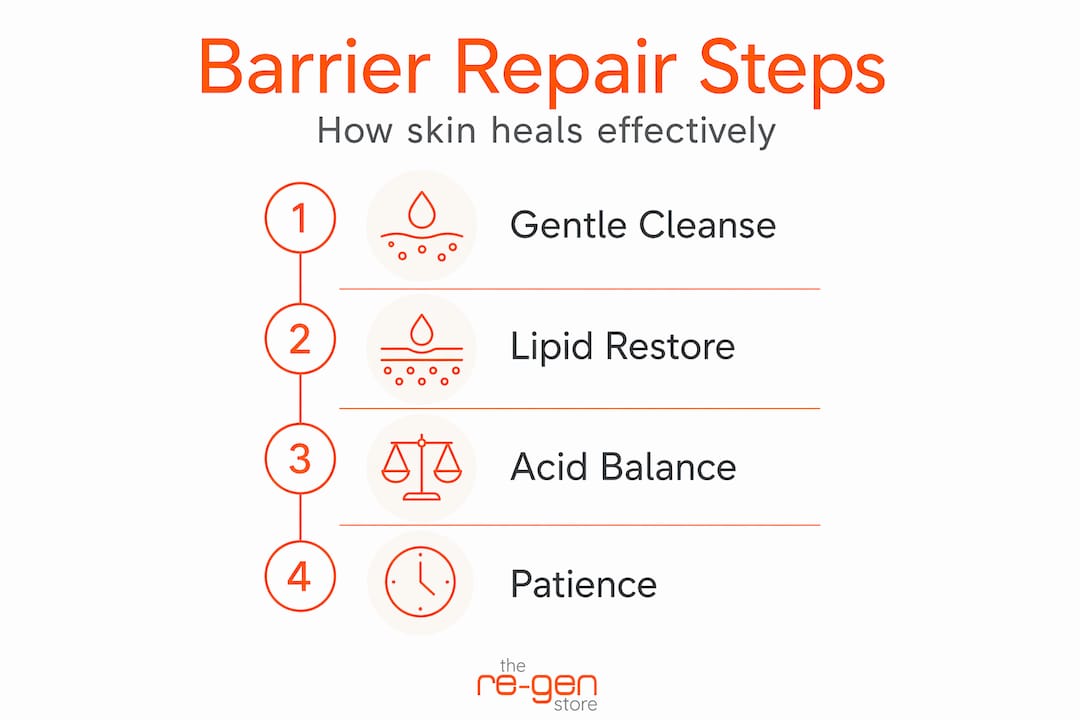
Realistic timelines matter here. Barrier repair takes weeks, not days. Expecting overnight results leads to the impatience that drives people back to actives too soon, restarting the damage cycle. Biology sets the pace. Your job is to stop disrupting it.
Practical steps to repair your skin barrier
The most effective repair protocol is also the simplest. This is where most people get it wrong, because they associate more products with more progress.
Switch to a gentle, pH-balanced cleanser. A cleanser with a pH close to 5.5 preserves enzyme activity and stops you from undoing repair with every wash. Avoid anything that leaves skin feeling squeaky clean. That feeling means your lipids went down the drain.
Use a moisturizer formulated with the full lipid trio. Look for ceramides, cholesterol, and fatty acids listed in the ingredients, not just ceramides. Apply it within 60 seconds of cleansing while skin is still slightly damp to lock in hydration.
Stop all actives during the repair window. Retinol, glycolic acid, salicylic acid, and vitamin C all belong in a healthy routine. They have no place in a compromised one. Pause everything that exfoliates or accelerates cell turnover until your barrier shows clear signs of recovery.
Add a humectant like panthenol. Unlike some humectants that pull water from deeper skin layers in dry conditions, panthenol also supports barrier lipid synthesis directly.
Apply mineral SPF daily. UV exposure is one of the fastest ways to undo barrier repair. Mineral sunscreens sit on top of skin without penetrating it, making them safer for compromised barriers than chemical alternatives.
Introduce occlusives only for severe damage. Occlusive agents seal moisture but do not accelerate the biological rebuild. Use them as a finishing layer over lipid creams, not as a standalone repair strategy.
You will know your barrier is recovering when skin stops feeling tight after washing, products no longer sting, and redness begins to fade. That is when you can slowly and individually reintroduce actives, starting with the gentlest options first. Following science-backed skin recovery steps during this phase prevents setbacks.
My perspective on barrier repair
I have seen the same pattern repeat itself countless times. Someone notices their skin is struggling, adds more products to fix it, and ends up six weeks later with skin that is angrier than when they started.
The hardest part of teaching effective barrier repair is convincing people that doing less is the actual treatment. We are conditioned to believe that active ingredients are progress. In reality, when your barrier is down, actives are interference. They are disrupting a biological process that your skin is trying hard to complete without your help.
What I have found to be true is that most people who struggle chronically with reactive or sensitive skin are not dealing with a mysterious skin type. They are dealing with a barrier that has never been given a real recovery window. Once they commit to a simplified routine for four to six weeks, the transformation is often dramatic.
The biology is sound. Functional skin architecture is what determines long-term skin health, not the number of actives in your routine. Trust the process, give your skin the lipids it needs, and stay out of its way.
— Kyle
Support your skin with plant-based repair
If you are looking for a repair approach that works with your skin’s biology rather than against it, Theregenstore offers a plant-based alternative worth exploring.
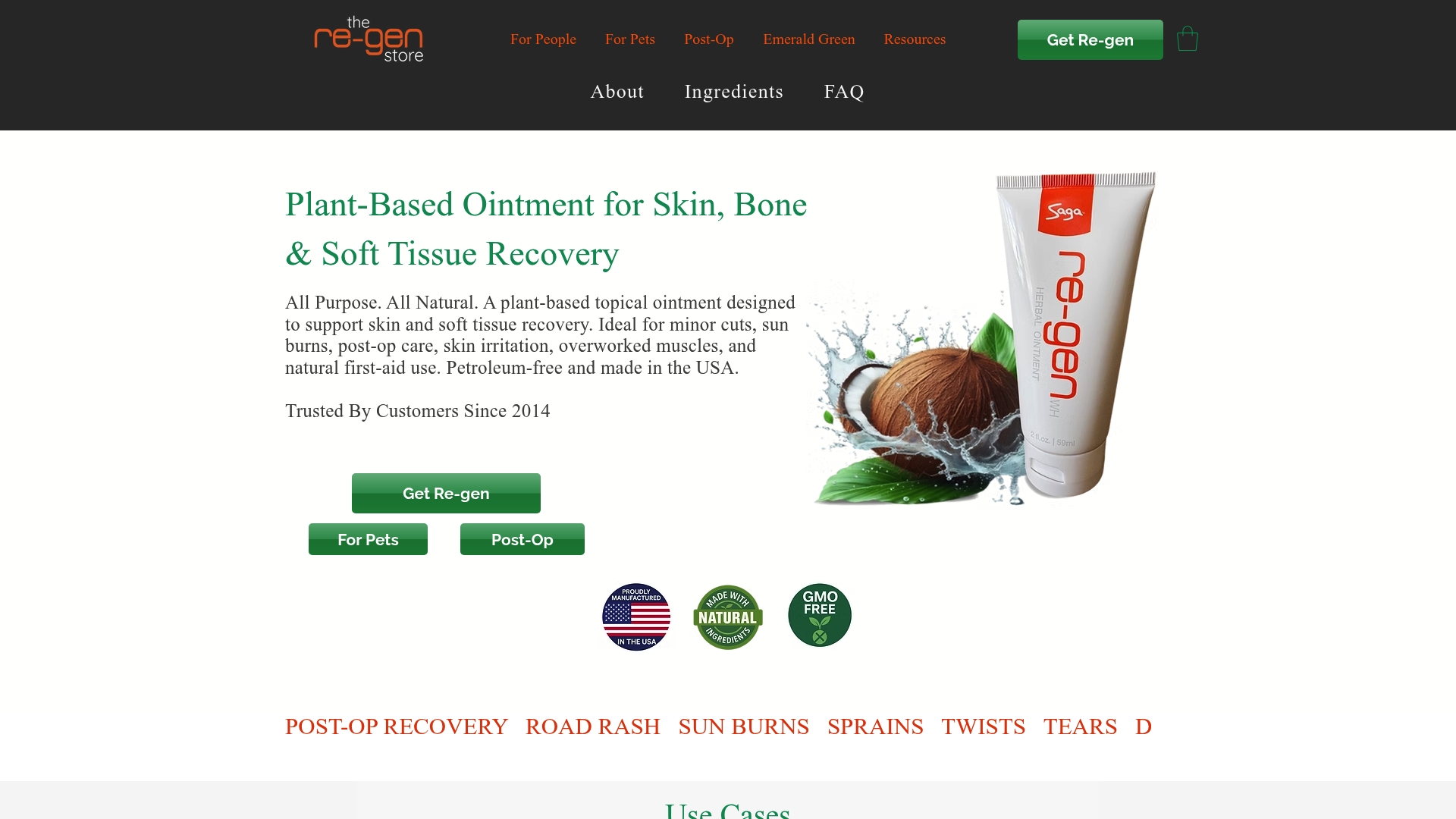
The Re-gen ointment is formulated without petroleum, synthetic chemicals, or conventional antibiotics. For skin that is compromised, reactive, or recovering from injury, a petroleum-free plant-based option avoids the occlusive-only trap and supports genuine tissue recovery. The plant-based ingredients work alongside your skin’s natural repair mechanisms, making it a practical fit for the simplified routines this article recommends. If you are managing a wound, a burn, or a skin condition that has not responded to conventional products, the Re-gen regenerative ointment is designed specifically for that recovery window. Explore the full product page to see ingredient details, usage guidelines, and what real users have experienced.
FAQ
What is skin barrier repair?
Skin barrier repair refers to the process of restoring the lipid matrix and structural integrity of the outermost skin layer. It involves replenishing ceramides, cholesterol, and free fatty acids to rebuild the protective barrier that prevents water loss and defends against irritants.
How long does it take to repair a damaged skin barrier?
Barrier repair takes weeks, not days. Clinical evidence shows that targeted lipid treatment reduces TEWL measurably over 56 days, which reflects how long biological repair genuinely takes when supported consistently.
What ingredients actually repair the skin barrier?
The most effective barrier repair ingredients are ceramides (especially longer acyl chain versions), cholesterol, and free fatty acids delivered together in a 3:1:1 molar ratio. Panthenol and niacinamide are useful supporting ingredients that aid lipid synthesis and reduce inflammation.
Can you repair your skin barrier while using retinol or acids?
No. Overuse of actives like retinols and exfoliating acids actively degrades barrier lipids and worsens inflammation. You need to pause all actives during the repair phase and reintroduce them only once barrier function has clearly recovered.
What are the signs of a damaged skin barrier?
Common signs include tightness after cleansing, stinging or burning when applying products, persistent redness, flaking that does not improve with moisturizer, and new breakouts in unusual areas. These symptoms indicate elevated TEWL and compromised barrier function.
Recommended
Comments