
The Role of Herbs in Tissue Repair: A 2026 Guide

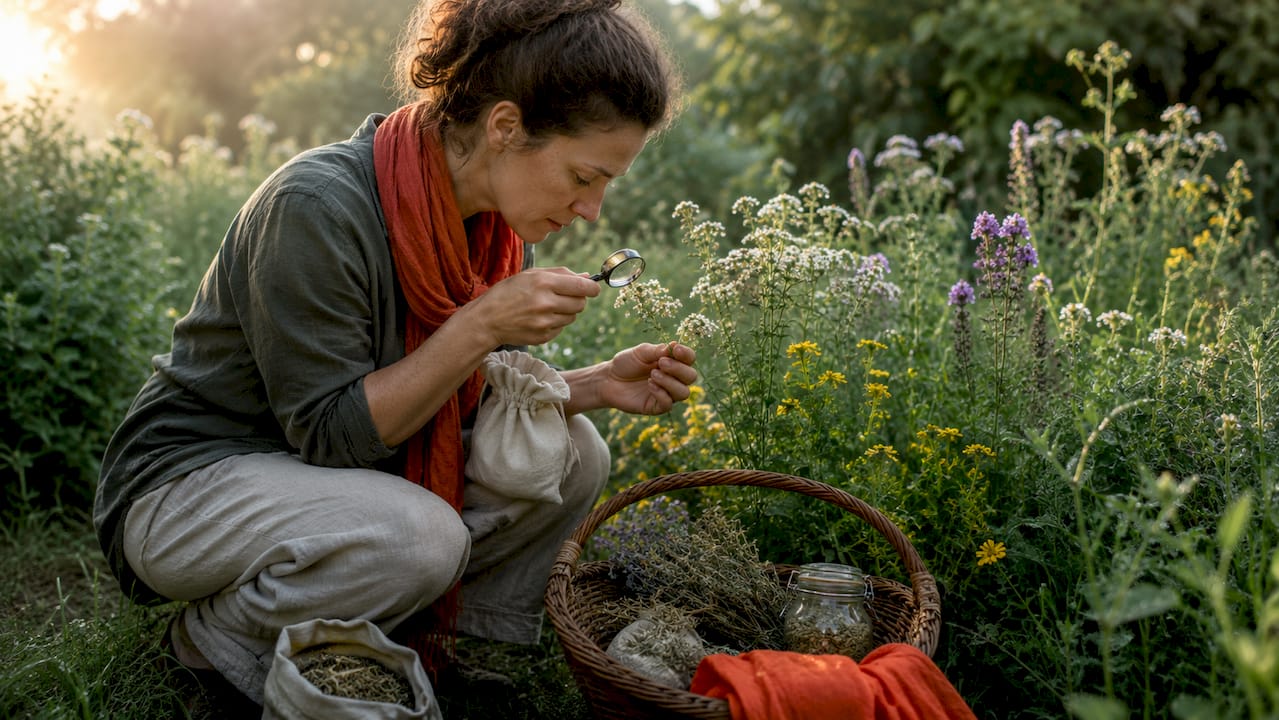
Herbs support tissue repair by delivering bioactive compounds that target inflammation, infection, oxidative stress, and collagen production simultaneously. This multi-pathway action is what separates plant-based remedies from conventional single-target drugs. Compounds like flavonoids, tannins, alkaloids, saponins, and terpenoids each contribute to a different phase of the healing process. Understanding the role of herbs in tissue repair helps you make informed choices about which plants to use, when to use them, and how to combine them for the best results.
What are the key biological mechanisms by which herbs support tissue repair?
Herbs work on tissue repair through at least four distinct biological pathways, and that breadth is their defining advantage. A single plant can reduce inflammation, fight bacteria, neutralize free radicals, and stimulate new tissue growth at the same time.
Here is how each mechanism operates:
Anti-inflammatory action: Flavonoids scavenge reactive oxygen species (ROS), reducing oxidative stress that slows healing. This protects healthy cells at the wound site from further damage.
Antimicrobial protection: Alkaloids and tannins create a hostile environment for bacteria and fungi. Preventing infection is one of the most critical steps in early wound recovery.
Angiogenesis and matrix remodeling: Saponins and terpenoids promote the growth of new blood vessels and support extracellular matrix (ECM) remodeling. New blood vessels deliver oxygen and nutrients that rebuilding tissue requires.
Collagen synthesis: Several phytochemicals directly stimulate fibroblast activity, which drives collagen production. Collagen is the structural protein that gives repaired tissue its strength.
Research confirms that herbal phytochemicals act pleiotropically on inflammation, oxidative stress, microbial burden, angiogenesis, and ECM remodeling through coordinated pathways. That coordinated action is what makes plant-based remedies particularly well suited to complex or chronic wounds.
Pro Tip: When reading about herbal wound care, look for studies that measure collagen density and epithelialization rates. These two markers tell you more about real tissue repair than pain scores alone.
Which specific herbs have proven efficacy in promoting tissue repair?
Several herbs have moved well beyond folk tradition into documented clinical and preclinical research. The table below summarizes the most studied options, their key compounds, and their primary healing actions.
Herb | Key Compounds | Primary Healing Action |
Plantago major | Aucubin, flavonoids, tannins | Collagen synthesis, angiogenesis, antimicrobial |
Symphytum officinale (Comfrey) | Allantoin, rosmarinic acid | Cell proliferation, bruise and sprain recovery |
Hypericum perforatum (St. John’s Wort) | Hypericin, hyperforin | Pain reduction, scar minimization |
Calendula officinalis | Triterpenoids, flavonoids | Anti-inflammatory, re-epithelialization |
Aloe vera | Acemannan, anthraquinones | Moisture retention, collagen stimulation |
Lavandula angustifolia (Lavender) | Linalool, linalyl acetate | Antioxidant, antibacterial, analgesic |
Plantago species stand out for their sheer chemical complexity. A review of 25 Plantago species identified 57 phytoconstituents contributing to wound healing through antibacterial activity, anti-apoptosis, collagen synthesis stimulation, angiogenesis promotion, and antioxidant enzyme enhancement. That range of action from a single plant genus is remarkable.
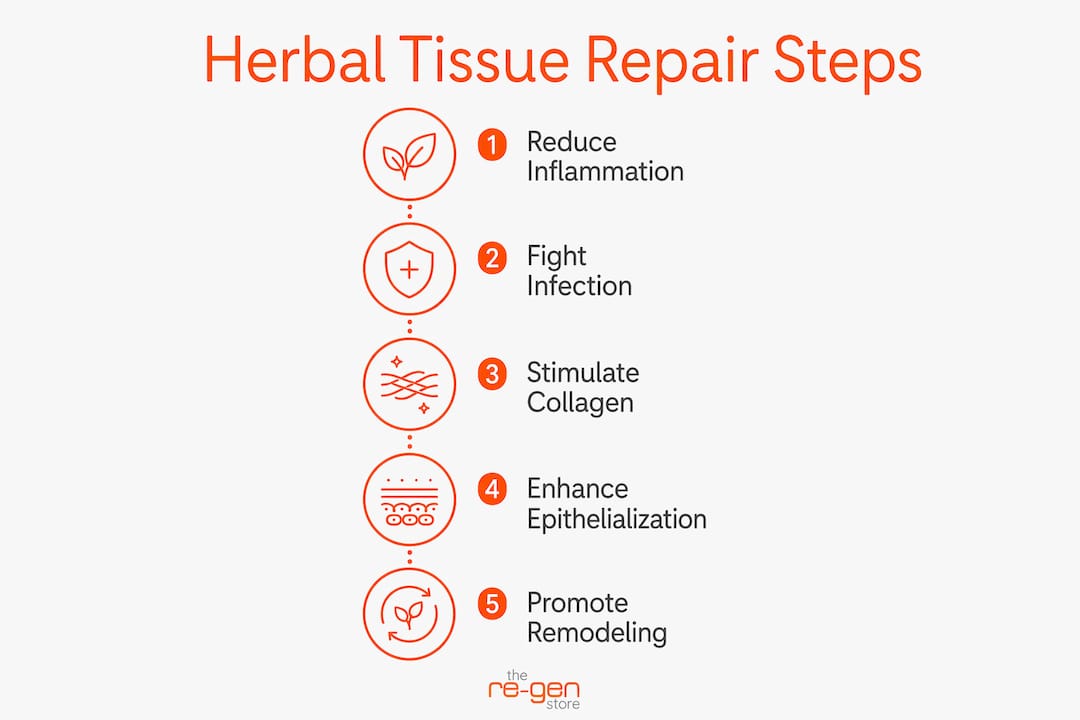
Experimental evidence also confirms that Centella asiatica, Curcuma longa, Aloe vera, and Panax ginseng enhance collagen synthesis and accelerate re-epithelialization through cellular signaling pathway modulation. These are not interchangeable. Each herb targets a slightly different part of the healing cascade, which is why combining them produces better outcomes than using any single herb alone.
A controlled animal study using topical ointments of Plantago major, Prunella vulgaris, and Symphytum officinale found that all three significantly improved wound closure rates and collagen density compared to untreated controls. The study used three daily applications across six groups, giving it enough statistical weight to draw meaningful conclusions.
Pro Tip: If you are exploring natural tissue healing herbs for a specific injury type, match the herb to the healing phase. Calendula and lavender suit early inflammation. Comfrey and Centella asiatica are better suited to the proliferation and remodeling phases.
How should herbs be used safely and effectively for natural tissue healing?
Effective herbal use depends on application method, timing, and an honest awareness of each herb’s limitations. Getting these details right separates a remedy that helps from one that causes harm.
Key safety and application guidelines:
Apply topically, consistently: St. John’s Wort oil applied three times daily for 16 days post-surgery reduces pain and scar formation effectively compared to placebo. Consistency matters more than quantity.
Avoid comfrey on open wounds: Comfrey’s allantoin promotes skin cell proliferation, but it can trap contaminants in open wounds and increase infection risk. Reserve comfrey for closed injuries like bruises and sprains.
Manage photosensitivity with St. John’s Wort: St. John’s Wort is photosensitizing. Avoid sunlight exposure on treated skin after application to prevent irritation or hyperpigmentation.
Choose polyherbal preparations when possible: Polyherbal formulations targeting different healing phases outperform single-herb treatments because wound healing involves overlapping biological stages that benefit from synergistic action.
Follow phase-appropriate timing: Use antimicrobial herbs like plantain and calendula early. Shift to collagen-stimulating herbs like comfrey and Centella asiatica once the wound has closed and is in the remodeling phase.
You can find detailed guidance on herbal post-surgical care for situations where tissue repair follows an operation. Post-operative wounds have specific needs that differ from everyday cuts or burns.
Pro Tip: Lavender essential oil accelerates wound healing and reduces pain and inflammation, as shown in rodent studies. Dilute it in a carrier oil before applying to skin. Undiluted essential oils can irritate healing tissue.
What does current research say about integrating herbs with conventional treatment?
The most significant shift in wound care research is the move toward integration rather than replacement. Herbs are not being positioned as alternatives to conventional medicine. They are being studied as complements that address what single-target drugs cannot.
“Traditional herbal medicine is not merely folklore but a validated therapeutic framework increasingly supported by modern research and enhanced delivery technologies, bridging ethnobotanical and contemporary medicine.” — Center for Traditional Medicine
Nanotechnology is one of the most promising delivery advances. Encapsulating herbal compounds in nanoparticles improves their bioavailability and allows for controlled release at the wound site. This addresses one of the longstanding criticisms of topical herbal preparations: that active compounds degrade before reaching target tissue.
Certain herbs are also being intentionally combined for synergistic effects at specific healing stages, illustrating that timing and sequence in herbal selection matter as much as the herbs themselves. This level of precision mirrors how conventional wound care protocols are structured. For a broader view of how plant-based approaches fit into a holistic wellness framework, integrative care models offer useful context.
The gap between public awareness and scientific progress remains wide. Research is advancing faster than most people realize, and the benefits of herbs for tissue repair are now supported by cellular signaling studies, not just traditional use records.
Key Takeaways
Herbs support tissue repair most effectively when selected by healing phase, combined in polyherbal formulations, and applied with consistent dosing and proper safety precautions.
Point | Details |
Multi-pathway action | Herbs target inflammation, infection, oxidative stress, and collagen production simultaneously. |
Plantago’s complexity | Plantago species contain 57 phytoconstituents, making them among the most studied herbs for wound repair. |
Polyherbal advantage | Combined herb formulations outperform single-herb treatments by addressing all four healing phases. |
Safety first | Comfrey must stay off open wounds; St. John’s Wort requires sun avoidance after application. |
Integration with medicine | Herbs complement conventional treatments rather than replace them, especially in chronic wound care. |
Why I think most people underestimate herbal wound care
Most people who try herbal remedies for healing pick one herb, apply it inconsistently, and then conclude it did not work. That is not a fair test of what plant-based medicine can do.
What I have observed is that the biology of tissue repair is layered. Hemostasis, inflammation, proliferation, and remodeling each require different inputs. No single herb covers all four stages well. The research on herbal extracts in wound healing makes this clear: the herbs that perform best in studies are almost always used in combination, applied consistently, and matched to the right phase.
The other thing people miss is safety nuance. Comfrey on a closed bruise is excellent. Comfrey on an open cut is a risk. St. John’s Wort on a post-surgical scar is well-supported. St. John’s Wort on skin that will be in direct sunlight is a problem. These distinctions are not complicated, but they require you to read past the headline claims.
My honest recommendation is to treat herbal wound care the way you would treat any evidence-based protocol. Use the right tool at the right time, follow dosing guidance, and work with a healthcare provider when the wound is serious. The science supports herbs. The science also defines their limits.
— Kyle
Plant-based wound care from Theregenstore
If the research on natural tissue healing herbs resonates with you, Theregenstore offers a practical way to apply these principles. The Re-gen ointment is a petroleum-free, plant-based formula designed to support skin, soft tissue, and wound recovery without synthetic chemicals.
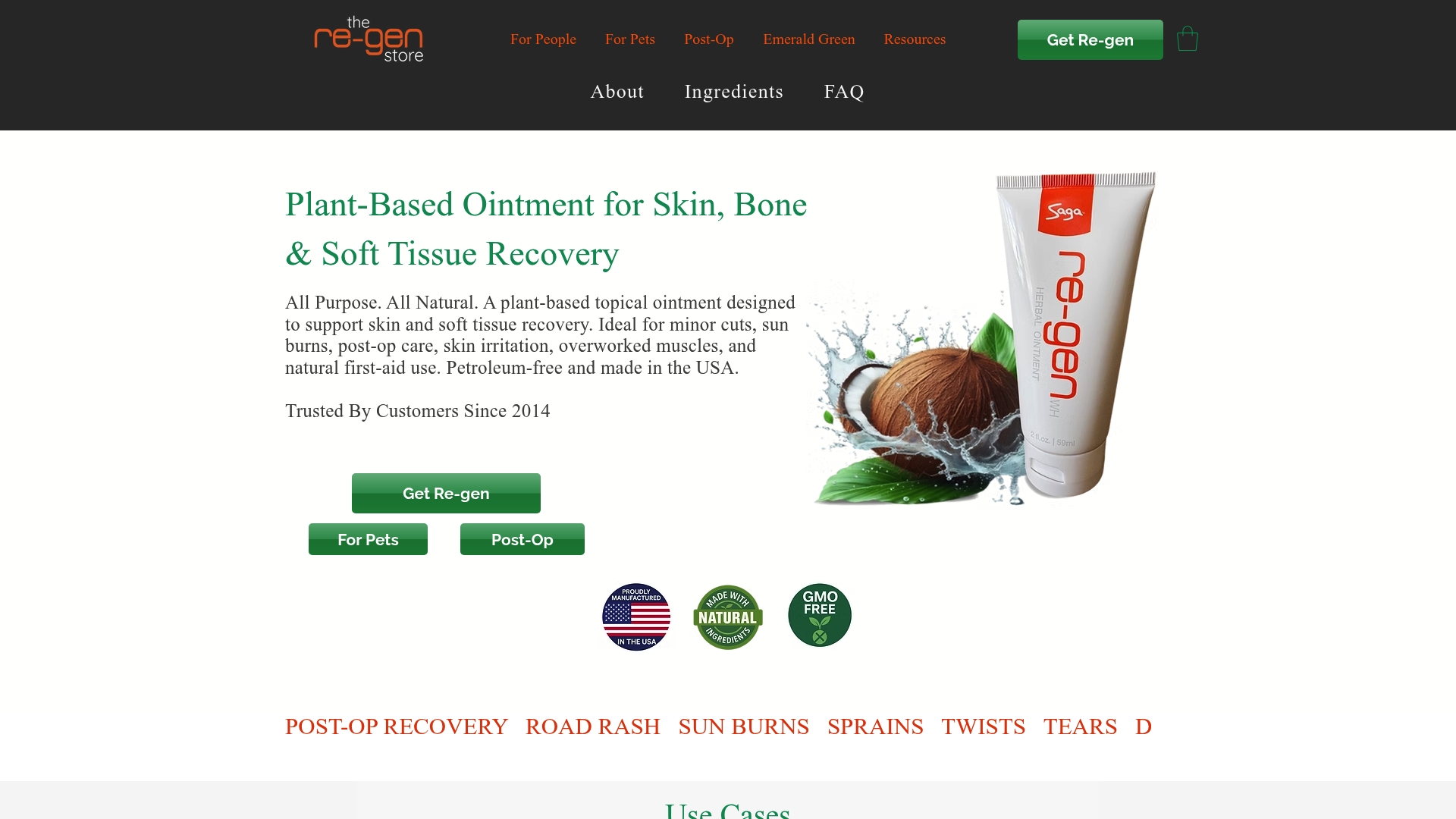
Theregenstore’s Re-gen is built around the same principles covered here: multi-ingredient plant formulas, chemical-free composition, and support across multiple healing phases. Whether you are managing a cut, a burn, a sprain, or a post-operative wound, the plant-based wound treatment range gives you a ready-made option grounded in herbal science. You can also explore the Re-gen regenerative ointment directly for full ingredient details and usage guidance.
FAQ
What is the role of herbs in tissue repair?
Herbs support tissue repair by delivering bioactive compounds that reduce inflammation, fight infection, stimulate collagen production, and promote new blood vessel growth. Their multi-pathway action makes them effective across all four phases of wound healing.
Which herbs aid in recovery from cuts and wounds?
Plantago major, Calendula, Aloe vera, and lavender are among the most studied herbs for wound recovery. Each targets a different aspect of healing, from antimicrobial protection to collagen stimulation.
Are herbal remedies for healing safe to use on open wounds?
Most topical herbs are safe on closed or healing wounds, but comfrey must not be applied to open wounds due to infection risk. Always confirm the wound is clean and closed before applying any herbal preparation.
How do polyherbal formulations differ from single-herb treatments?
Polyherbal formulations combine herbs that target different healing phases, producing synergistic effects that single herbs cannot replicate. Research confirms they outperform single-herb treatments in wound closure and tissue regeneration outcomes.
Can herbs be used alongside conventional wound treatments?
Yes. Current research supports integrating herbal remedies with conventional care rather than replacing one with the other. Herbs address biological pathways that standard drugs often leave untreated, particularly in chronic or complex wounds.
Recommended
Comments