
The Role of Herbal Extracts in Wound Healing


Herbal extracts are defined as concentrated plant-derived compounds that accelerate wound healing by simultaneously targeting inflammation, oxidative stress, microbial activity, and tissue regeneration. The role of herbal extracts in wound healing is now supported by a growing body of 2026 clinical research, with plants like Heliotropium curassavicum, Sesuvium portulacastrum, and Cymbopogon proximus demonstrating measurable, reproducible results. These are not folk remedies waiting for validation. They are biologically active agents with identified mechanisms, and they work through pathways your body already uses to repair itself.
What biological mechanisms make herbal extracts effective in wound healing?
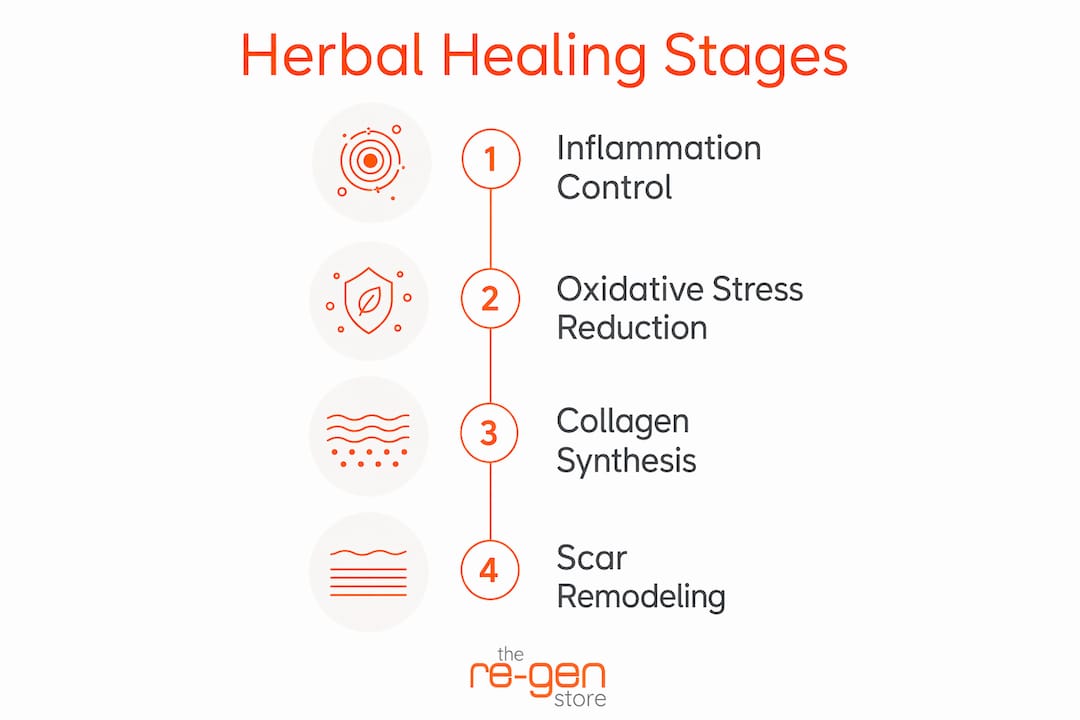
Plant-derived phytochemicals including flavonoids, tannins, saponins, alkaloids, and terpenoids modulate multiple wound healing processes at once. This multi-target action is what separates herbal compounds from most synthetic drugs, which typically address only one pathway. When you apply a well-formulated herbal extract to a wound, several things happen in parallel:
Inflammation control: Flavonoids and alkaloids suppress the NF-κB signaling pathway, reducing pro-inflammatory cytokines like TNF-α that, when unchecked, delay healing and increase tissue damage.
Oxidative stress reduction: Phenolic compounds activate the Nrf2 pathway, raising glutathione (GSH) levels and scavenging reactive oxygen species (ROS) that damage new tissue.
Antimicrobial protection: Tannins and terpenoids disrupt bacterial cell membranes, lowering infection risk without the resistance concerns tied to conventional antibiotics.
Tissue regeneration: Saponins and growth factor modulators stimulate collagen synthesis, angiogenesis (new blood vessel formation), and re-epithelialization, the process by which new skin covers the wound surface.
The TGF-β pathway is particularly relevant here. It governs collagen deposition and scar remodeling, and several herbal compounds directly upregulate it during the proliferative phase of healing. This is why botanical therapies require daily use for 14 days or more to fully engage these pathways. Short applications produce limited results.
Pro Tip: Apply anti-inflammatory herbal extracts within the first 72 hours of injury, when the inflammatory phase is most active. Switch focus to angiogenesis-supporting herbs like Calendula officinalis during the proliferative phase, days 3 through 14, for better tissue repair outcomes.
How do specific herbal extracts accelerate wound closure?
The research on individual plant extracts is specific enough to be genuinely useful. Here is what the 2026 evidence shows for three well-studied wound healing plants.
Herbal Extract | Key Result | Mechanism |
Heliotropium curassavicum | 39% faster wound closure at 200 mg/kg | 94% TNF-α reduction, 220% GSH increase |
Sesuvium portulacastrum | 75% wound area reduction with 10% gel | Comparable to topical antibiotic Nebacetin |
Cymbopogon proximus | Significant TNF-α attenuation, ~72% healing during study |
Heliotropium curassavicum stands out for its biochemical specificity. Its butanol extract contains pyrrolizidine alkaloids, phenylpropanoids, and fatty acid amides that work together to reduce malondialdehyde (MDA) by 66%, a marker of oxidative tissue damage. That 220% increase in glutathione means the wound environment becomes far less hostile to new cell growth. Near-complete healing by day 14 is a clinically meaningful result.
Sesuvium portulacastrum is notable because its 10% macerated gel matched the collagen deposition and re-epithelialization results of Nebacetin, a prescription topical antibiotic. For anyone seeking a natural wound healing herb that performs at a pharmaceutical level, this is a significant finding. It also suggests that plant extracts for skin recovery do not require high concentrations to be effective.
Cymbopogon proximus essential oil brings strong anti-inflammatory action to the table. Its TNF-α reduction is comparable to Heliotropium curassavicum, and its near-complete wound closure by day 14 confirms that essential oil delivery can be as effective as gel or ointment formats when formulated correctly.
What are the advantages of polyherbal formulations for wound care?
Single-herb treatments address one or two mechanisms well. Polyherbal formulations combine flavonoids, tannins, alkaloids, saponins, and terpenoids to cover every phase of wound repair simultaneously. The synergistic effect is not just additive. Certain phytochemical combinations improve each other’s bioavailability, meaning more active compound reaches the wound tissue per application.
For complex wound types, including chronic wounds, diabetic ulcers, and post-operative incisions, this matters considerably. A single anti-inflammatory herb may reduce swelling but do nothing for bacterial load or collagen deposition. A polyherbal formula addresses all three at once, which is why synergistic phytochemical combinations consistently outperform single-extract treatments in controlled studies.
The practical benefits of polyherbal wound care include:
Broader antimicrobial coverage across gram-positive and gram-negative bacteria
Simultaneous modulation of inflammation and oxidative stress
Enhanced collagen synthesis and faster re-epithelialization
Reduced risk of side effects compared to high-dose single-extract applications
Better suitability for sensitive skin and animals, where tolerability matters
One formulation challenge worth knowing: standardization. Not all polyherbal products contain consistent phytochemical concentrations across batches. When choosing a plant-based wound treatment, look for products that specify their active botanical ingredients and sourcing standards. Vague ingredient lists are a red flag.
Pro Tip: For pet wounds, polyherbal formulations are preferable to single-herb treatments because they reduce the risk of skin irritation from high concentrations of any one compound. Always confirm the formula is free from essential oils like tea tree, which are toxic to cats.
How to use herbal extracts for wound healing effectively
Knowing which herbs work is only part of the picture. How you apply them determines whether you get clinical-level results or minimal benefit.
Choose the right delivery system. Ointments provide occlusion, which keeps moisture in and contaminants out. They suit dry or scabbing wounds. Gels maintain a moist wound environment, which supports faster re-epithelialization. Formulation type directly affects how much active phytochemical reaches the wound bed.
Apply consistently for at least 14 days. Botanical therapies require daily topical use for 14 days or more to realistically induce collagen synthesis and growth factor modulation. Sporadic application does not produce the same results.
Prioritize petroleum-free, plant-based formulas. Petroleum-based carriers can occlude pores and interfere with the skin’s natural repair signals. For sensitive skin and pets, petroleum-free plant-based options are safer and more compatible with the healing environment.
Account for systemic absorption. When the epidermal barrier is breached, topical compounds can enter the bloodstream. Use only products with verified purity and no synthetic additives, especially for children and animals.
Watch for herb-drug interactions. Calendula officinalis and Symphytum officinale modulate TGF-β1 and VEGF-A growth factors, which can interact with anticoagulants and immunosuppressants. If you or your pet is on medication, consult a healthcare provider before starting herbal wound care.
Key takeaways
Herbal extracts accelerate wound healing through multi-target phytochemical mechanisms, and polyherbal formulations applied consistently for 14 or more days produce the strongest, most clinically supported outcomes.
Point | Details |
Multi-target mechanisms | Herbal extracts address inflammation, oxidative stress, infection, and tissue repair simultaneously. |
Specific extract results | Heliotropium curassavicum achieves 39% faster closure; Sesuvium portulacastrum matches antibiotic-level collagen deposition. |
Polyherbal advantage | Combining phytochemical classes improves bioavailability and covers all wound healing phases more effectively. |
Consistency is required | Daily application for at least 14 days is necessary to trigger collagen synthesis and growth factor modulation. |
Formulation quality matters | Petroleum-free, standardized plant-based ointments or gels deliver better absorption and are safer for pets and sensitive skin. |
Why I think herbal wound care deserves more credit than it gets
Most people who try herbal remedies for wounds give up too early or use poorly formulated products and conclude that natural options simply do not work. That conclusion is wrong, but it is understandable. The evidence for plants like Heliotropium curassavicum and Cymbopogon proximus is specific and reproducible. The problem is rarely the herbs. It is the formulation quality and the application consistency.
What I find genuinely compelling about the research is the pleiotropic action. A single synthetic drug targets one receptor. A well-constructed polyherbal formula targets NF-κB, Nrf2, TGF-β, and microbial cell walls at the same time. For chronic wounds or complex injuries, that breadth of action is not a nice-to-have. It is the whole point. You can speed up wound healing naturally without sacrificing efficacy, but only if you use the right product and give it enough time to work.
The future of herbal wound care is in standardized, evidence-backed formulations that combine the best of botanical science with rigorous quality control. That is where the real results are.
— Kyle
Plant-based wound care from Theregenstore
If the science behind herbal wound healing resonates with you, Theregenstore’s Re-gen ointment is built on exactly these principles. It is a petroleum-free, plant-based formula designed for skin, soft tissue, and post-operative wound recovery in both humans and pets.
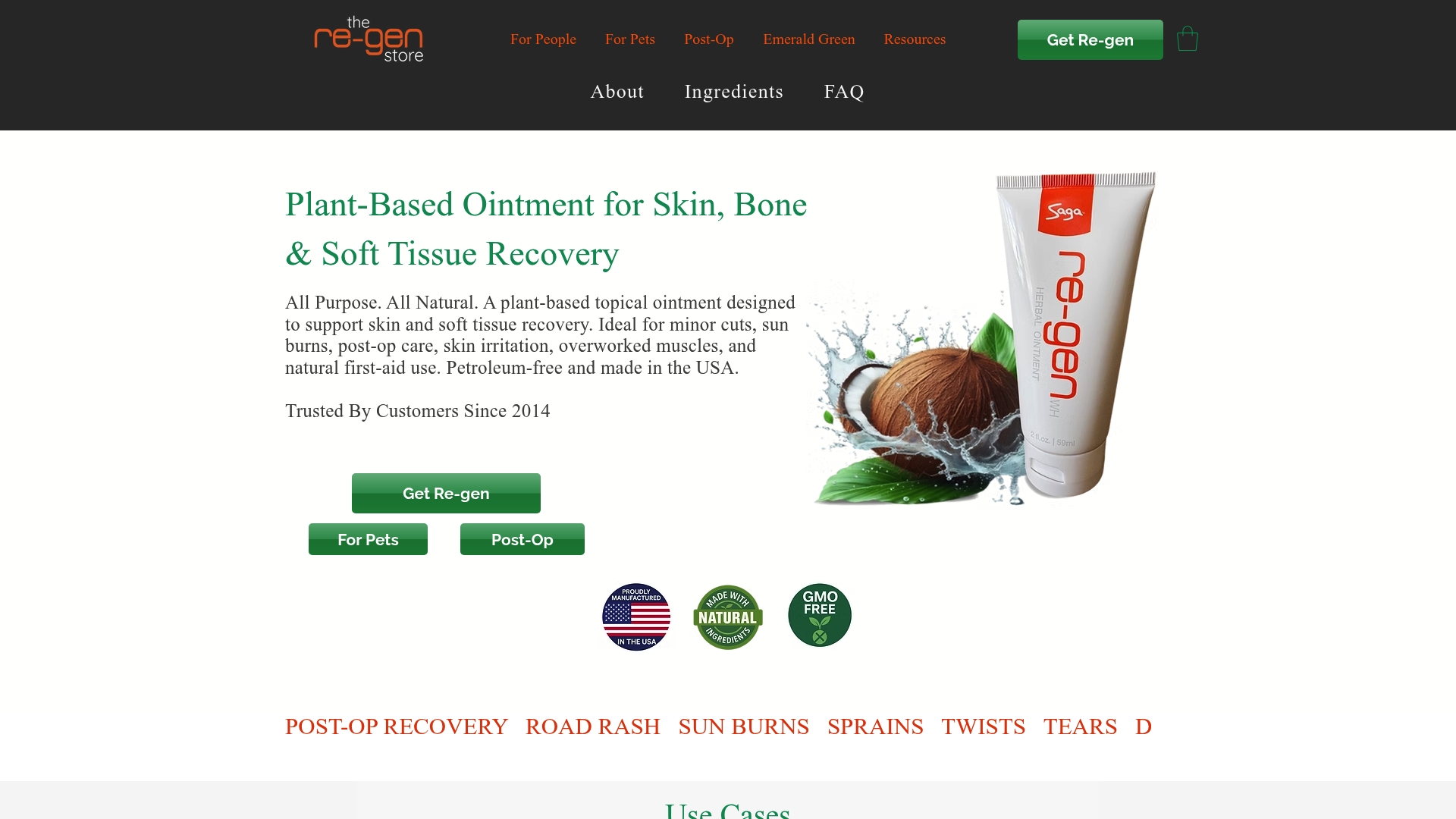
Re-gen combines scientifically supported botanical ingredients without synthetic additives, making it a practical alternative to conventional antibiotic ointments like Neosporin. It is formulated for consistent daily use, which the research confirms is the key to real results. Whether you are managing a cut, a burn, a sprain, or supporting your pet’s recovery, Theregenstore’s plant-based wound treatment is designed to work with your body’s natural repair process. You can also explore the full Re-gen regenerative ointment product page for ingredient details and usage guidelines.
FAQ
What is the role of herbal extracts in wound healing?
Herbal extracts accelerate wound healing by modulating inflammation, reducing oxidative stress, controlling microbial growth, and stimulating collagen synthesis and re-epithelialization. These multi-target effects make them effective across all phases of the wound repair process.
Which herbal extracts are most effective for wound healing?
Heliotropium curassavicum, Sesuvium portulacastrum, and Cymbopogon proximus show strong 2026 research support, with wound closure improvements ranging from 39% to near-complete healing by day 14. Calendula officinalis and Symphytum officinale are also well-supported for deep tissue regeneration.
How long does it take for herbal wound treatments to work?
Consistent daily application for at least 14 days is required to induce meaningful collagen synthesis, re-epithelialization, and growth factor modulation. Shorter application periods produce limited results regardless of the extract used.
Are herbal wound treatments safe for pets?
Yes, when formulated correctly. Petroleum-free, plant-based ointments without toxic essential oils like tea tree are safe for animals. Polyherbal formulas are preferable for pets because they avoid high concentrations of any single compound that could cause skin irritation.
Do polyherbal formulas work better than single-herb treatments?
Research confirms that polyherbal combinations produce synergistic wound healing effects, improving bioavailability and covering multiple repair phases simultaneously. Single-herb treatments address fewer mechanisms and typically produce slower, less complete results.
Recommended
Comments