
How to Heal Pet Cuts Safely: A Natural Care Guide

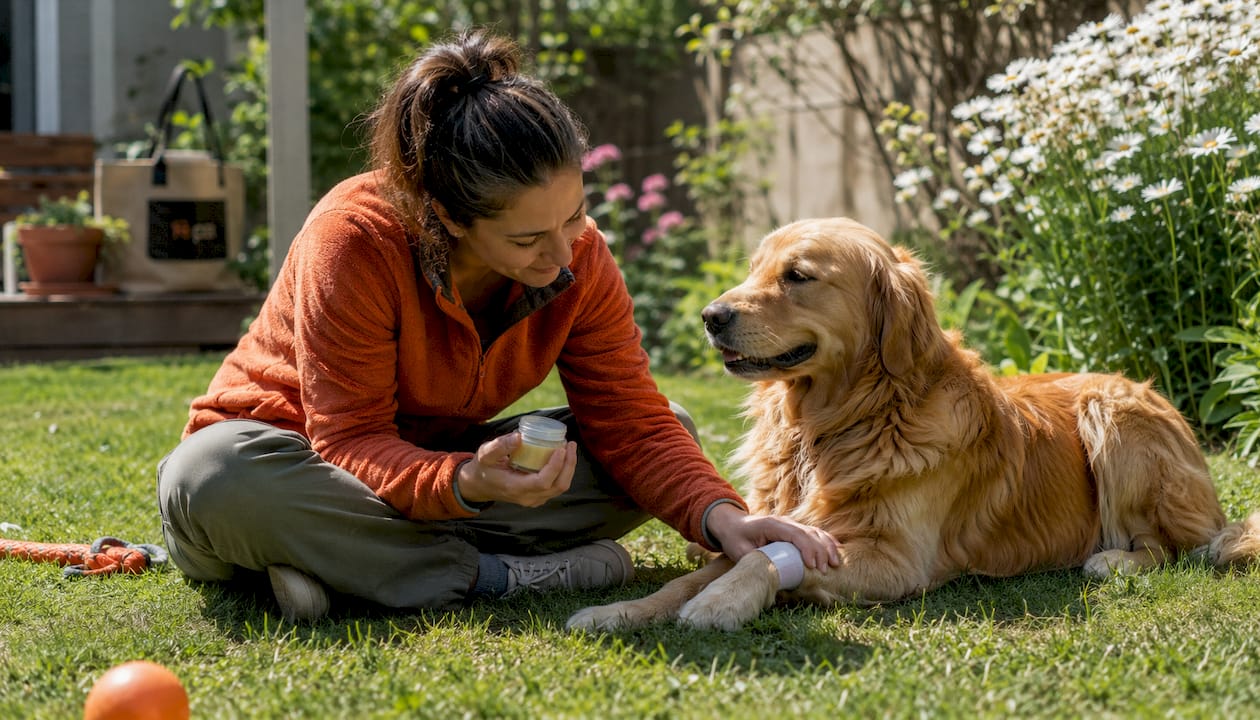
Healing pet cuts safely means stopping bleeding with direct pressure, cleaning the wound with sterile saline or lukewarm water, protecting it from licking, and supporting tissue recovery with a pet-safe topical treatment. Most minor cuts on dogs and cats can be managed at home when you follow the right steps in the right order.
Here is what that looks like in practice:
Stop bleeding first. Press a clean gauze pad or cloth firmly against the wound. Minor bleeding usually stops within a few minutes of steady pressure.
Clean gently. Rinse with sterile saline or lukewarm water. Skip hydrogen peroxide and rubbing alcohol entirely.
Protect from licking. An Elizabethan collar or recovery suit prevents your pet from introducing bacteria into the wound.
Apply a pet-safe topical. Natural plant-based ointments support healing without the chemical load of conventional products.
Monitor daily. Watch for redness, swelling, or discharge that signals infection.
Wounds that are deep, gaping, or actively pumping blood need a veterinarian, not a first-aid kit.
Table of Contents
What kind of wound does your pet have, and when does it need a vet?
A wound is any damage to the skin or underlying tissue. Open wounds include cuts, scrapes, and punctures. Closed wounds, like bruises or contusions, involve internal tissue damage without breaking the skin. Knowing which type you are dealing with shapes every decision that follows.
Minor surface cuts with minimal bleeding are generally safe to treat at home. Puncture wounds are the exception. They look small but can trap bacteria deep in tissue, creating conditions for abscess formation. A wound that is deeper than it is wide should go to a vet, not get covered with ointment.
Seek veterinary care immediately if you notice:
Bleeding that does not stop after a few minutes of firm pressure
A wound with separated or gaping skin edges
Glass, wood, or other foreign material inside the wound
Injury near the eyes, mouth, joints, or paw pads
Signs of shock: pale gums, rapid breathing, or collapse
A bite wound from another animal
Pro Tip: If you see something embedded in the wound, do not try to remove it yourself. Cover the area loosely and get to a vet. Pulling out a foreign object can cause sudden, severe bleeding.
How to treat pet wounds at home, step by step
1. Restrain your pet safely
Even the gentlest dog or cat can bite when frightened or in pain. Safe restraint using a basket muzzle for dogs or a nylon muzzle for cats prevents injury to you and your pet. Wrapping your pet in a towel also helps. A second person to assist makes the process calmer for everyone.
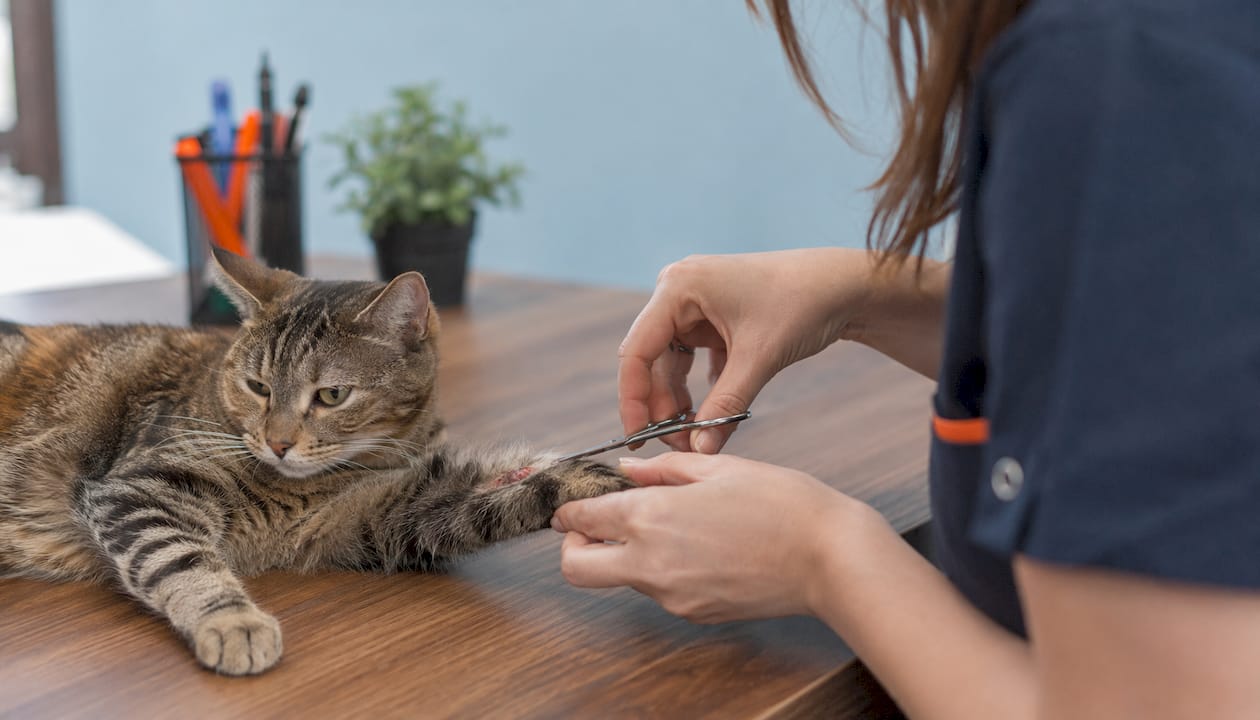
2. Clip the fur around the wound
Clipping fur with blunt-tipped scissors or electric clippers reduces the risk of hair acting as a bacterial wick. Work carefully and avoid pushing clippings into the wound bed. If you use clippers, place a small amount of sterile water-soluble lubricant in the wound first to catch stray hairs.
3. Flush the wound thoroughly
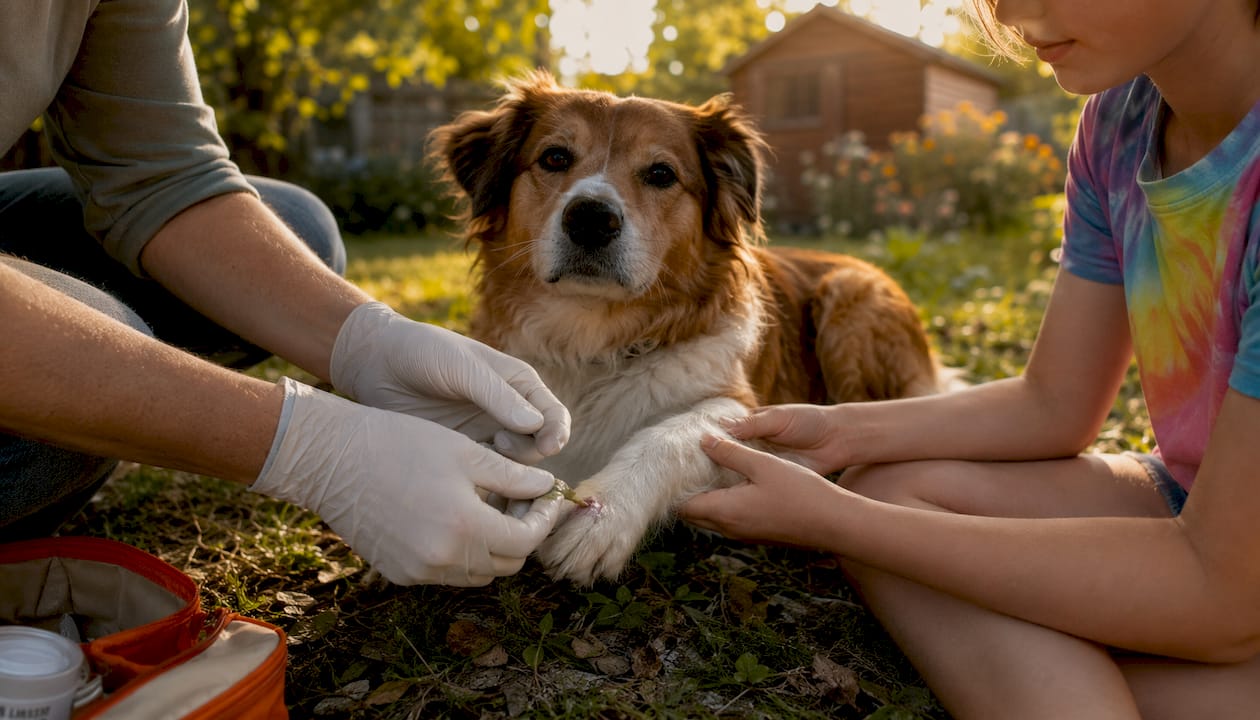
Rinse with sterile saline or lukewarm tap water. You can make a saline solution at home by dissolving one teaspoon of salt in two cups of water. Flushing removes debris, hydrates the tissue, and lets you see the wound clearly. Avoid soaps, rubbing alcohol, and hydrogen peroxide, which damage healthy skin cells and slow healing.
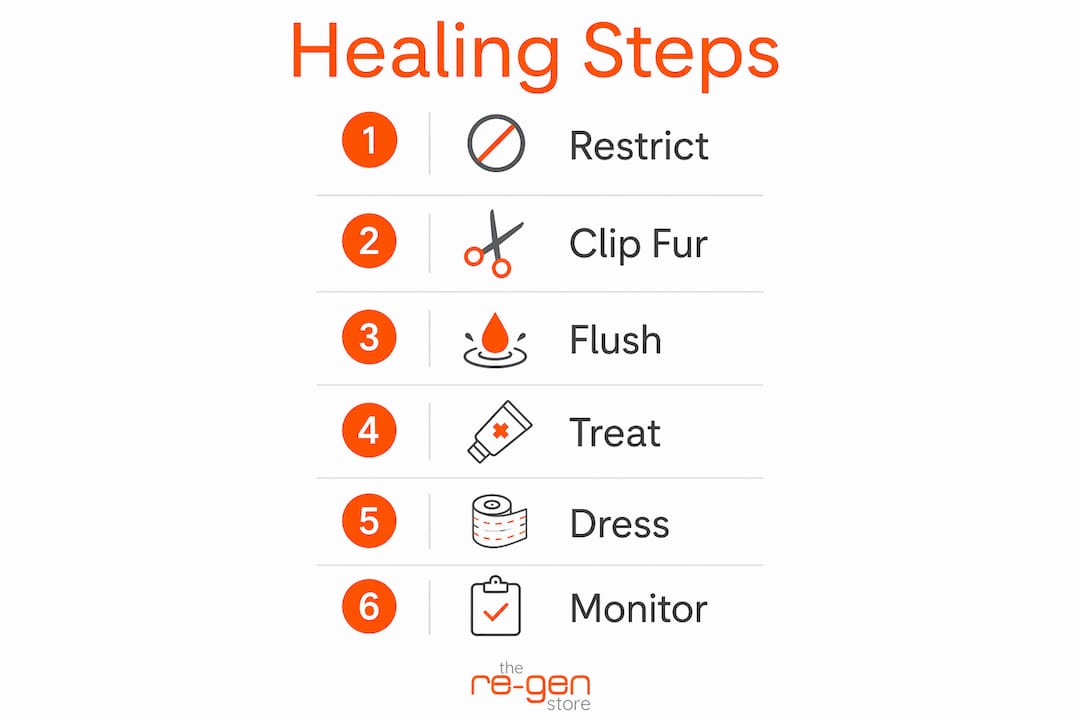
4. Apply a pet-safe topical treatment
Once the wound is clean and the surrounding skin is dry, apply a thin layer of a plant-based healing ointment with natural soothing ingredients for insect bites to support recovery. For open, non-puncture wounds, natural options like medical-grade honey or a product such as Re-gen ointment from Theregenstore support tissue recovery without harsh chemicals. Do not apply thick ointments to puncture wounds or deep cuts, as they can seal bacteria inside.
5. Dress and protect the wound
Cover the area with sterile gauze pads and secure lightly with vet wrap. Do not pull the wrap tight. For bandaged wounds, change the dressing daily for the first three days, then every two to three days. Fit your pet with an Elizabethan collar or recovery suit to prevent licking.
What to avoid:
Hydrogen peroxide or rubbing alcohol on open tissue
Human ointments not cleared for animal use
Tight bandaging that cuts off circulation
Probing or squeezing the wound to check depth
Pro Tip: Keep a small pet first-aid kit stocked with sterile saline, gauze pads, vet wrap, blunt scissors, and a recovery cone. Having these on hand means you can act immediately instead of improvising.
How to manage pain and track your pet’s healing progress
Pets cannot tell you when something hurts, so you have to read the signals. Recognizing pain early helps you respond before a minor wound becomes a bigger problem.
Signs your pet is in pain:
Limping or reluctance to use the affected limb
Excessive licking, chewing, or scratching at the wound site
Whimpering, growling, or flinching when the area is touched
Loss of appetite or low energy
Hiding or unusual withdrawal from normal activity
For minor wounds, pain typically decreases as the wound begins to close. If your pet seems increasingly uncomfortable after the first day or two, that is worth a call to your vet. Prescription pain relief such as meloxicam or carprofen may be appropriate, but these require veterinary guidance. Never give your pet human pain medications like ibuprofen or acetaminophen.
Tracking healing progress day by day:
Inspect the wound each morning in good light.
Note the color and consistency of any discharge. Clear, thin fluid is normal. Thick, yellow, or green discharge signals infection.
Check for signs of infection: heat, swelling, redness, or foul odor around the wound.
Photograph the wound daily. Side-by-side photos make it easy to see whether the wound is shrinking or worsening.
Contact your vet if there is no visible improvement within two to three days.
Special care for wounds on sensitive areas
Wounds on the ears, paws, face, and around the eyes need extra attention. These areas are harder to bandage, more exposed to contamination, and more likely to be disturbed by your pet.
Paw wounds collect dirt with every step. After cleaning, cover the paw with a light gauze wrap and a clean sock secured with medical tape. Change the covering at least twice daily, and check for swelling above the bandage, which can indicate the wrap is too tight. Prevent licking for 1-2 weeks during healing, using socks or collars as needed.
Ear wounds bleed heavily because of the dense blood supply in ear tissue. Apply gentle pressure with gauze and keep your pet from shaking its head, which reopens clots. An ear wrap or snood can help hold a dressing in place.
Face and eye-adjacent wounds carry the highest risk. Any cut near the eye should be evaluated by a vet before you attempt home treatment. For facial cuts away from the eyes, clean gently with saline-soaked gauze and avoid any product that could run into the eye.
Avoid heavy ointments near the eyes or inside the ear canal.
Use a recovery collar for all sensitive-area wounds to prevent pawing or scratching.
Check for swelling or discharge twice daily rather than once.
For paw wounds, limit outdoor activity until the skin has closed.
Pro Tip: For paw wounds, apply a thin layer of a natural healing balm after cleaning, then cover with a clean sock before walks. This keeps the wound protected without restricting blood flow.
Wounds in sensitive areas also tend to take longer to heal because of constant movement and moisture exposure. Patience and consistent monitoring matter more here than anywhere else.
Natural topical treatments that support safe healing of pet cuts
The best natural treatments for pet cuts work with the wound’s healing stages, not against them. Applying the right product at the wrong time can do real harm.
Medical-grade honey, sugar dressings, and silver-based treatments are established natural agents used in veterinary wound care. Honey draws moisture from bacterial cells, reduces inflammation, and keeps the wound surface moist without sticking to new tissue. Sugar works similarly through osmotic pressure, inhibiting bacterial growth while supporting the removal of dead tissue. Silver has bactericidal properties and may also support new blood vessel formation.
Re-gen ointment from Theregenstore is a plant-based topical designed to support skin and soft tissue recovery without petroleum or synthetic chemicals. It is positioned as a natural alternative to conventional antibiotic ointments, making it a practical option for pet owners who want to avoid chemical-heavy products. Apply it to clean, non-puncture wounds after flushing and drying the area. For more on plant-based wound treatment options, Theregenstore provides detailed guidance on ingredient safety and application.
Safe natural options at a glance:
Sterile saline: best for flushing at every stage
Medical-grade honey: antibacterial, moisture-balancing, suitable for open wounds in the inflammatory phase
Diluted povidone-iodine: mild disinfectant for initial cleaning (tea-colored dilution only)
Plant-based ointments like Re-gen: support tissue recovery without harsh additives
Herbal rinses (chamomile, calendula): reduce inflammation and soothe surrounding skin
One important caution: thick ointments applied to puncture wounds can seal bacteria inside. Always clean thoroughly before applying any topical, and skip ointments entirely on wounds that need drainage. For more on natural healing options backed by evidence, Theregenstore’s resource library covers both pet and human applications.
How to observe and promote proper healing stages
Wound healing in pets follows a predictable sequence: inflammation, tissue formation, and remodeling. Knowing what each stage looks like helps you tell normal progress from a complication.
In the first one to three days, expect some redness, mild swelling, and a small amount of clear or slightly pink discharge. This is the inflammatory phase, and it is normal. The wound may look worse before it looks better. Keep it clean, keep your pet from licking, and resist the urge to probe or squeeze.
By days four through seven, healthy wounds begin to close from the edges inward. You should see new pink tissue forming and the discharge becoming minimal or stopping entirely. Fur may begin to regrow around the margins. If the wound is still wide open or the discharge is thick and colored at this point, contact your vet.
Full skin closure for minor cuts typically takes one to two weeks, depending on the wound’s location and your pet’s overall health. Protect the wound from licking for 1-2 weeks during healing. To support each stage actively:
Keep the wound moist but not wet. Dry wounds heal more slowly, but excess moisture encourages bacterial growth.
Change dressings on schedule. Stale bandages trap bacteria and delay healing.
Maintain the pet wound healing process by applying a thin layer of a natural topical after each cleaning.
Restrict your pet’s activity to reduce tension on the wound edges.
Complications beyond infection you should watch for
Infection is the most common concern, but it is not the only one. Two complications that pet owners frequently miss are proud flesh and delayed healing.
Proud flesh (exuberant granulation tissue) occurs when the body produces too much repair tissue, creating a raised, red, moist mass that grows above the wound surface. It is more common in horses but does occur in dogs and cats, particularly on limbs where movement constantly disrupts the wound. Proud flesh does not resolve on its own and usually requires veterinary debridement. If you notice the wound tissue rising above the surrounding skin rather than flattening, call your vet.
Delayed healing can result from several factors: poor nutrition, underlying illness, chronic licking, or a wound that was closed too early over contaminated tissue. A wound that shows no measurable progress after five to seven days of proper home care needs professional evaluation. Your vet may recommend debridement, a different dressing type, or systemic antibiotics if deeper tissue is involved.
Other complications to watch for include:
Wound dehiscence: the edges separate after appearing to close, often from too much activity or tension
Seroma: a pocket of clear fluid that forms under the skin near the wound
Fistula formation: a tunnel-like tract that develops when infection tracks deep into tissue
Any of these warrants a vet visit. Home care has real limits, and catching complications early keeps them from becoming serious.
Theregenstore’s Re-gen ointment: a natural next step for pet wound care
Pet owners who want a chemical-free option for supporting minor wound recovery now have a practical alternative to conventional antibiotic ointments. Theregenstore’s Re-gen ointment is a plant-based, petroleum-free topical formulated to support skin and soft tissue healing in both people and animals. It contains no synthetic preservatives and is designed for pet owners who prefer natural, herbal first-aid solutions.

Re-gen works best on clean, non-puncture wounds after proper flushing and drying. It is not a replacement for veterinary care in serious injuries, but for the minor cuts, scrapes, and abrasions that come with everyday pet life, it offers a gentler path to recovery than products loaded with synthetic antibiotics. Theregenstore also carries a natural alternative to Neosporin for pet owners specifically looking to move away from conventional antibiotic ointments.
Visit theregenstore.com to review the full ingredient list, application guidelines, and sizing options for Re-gen ointment.
Key Takeaways
Healing pet cuts safely requires prompt bleeding control, gentle cleaning with saline, consistent wound protection, and a stage-appropriate topical to support tissue recovery.
Point | Details |
Stop bleeding first | Apply firm, steady pressure with clean gauze for a few minutes before cleaning. |
Avoid harsh antiseptics | Hydrogen peroxide and rubbing alcohol damage healthy skin cells and slow healing. |
Prevent licking | Use an Elizabethan collar or recovery suit to prevent licking for 1-2 weeks during healing of minor injuries. |
Match topical to wound type | Thick ointments can trap bacteria in puncture wounds; clean and flush before applying any topical. |
Theregenstore Re-gen ointment | A plant-based, petroleum-free option for supporting minor cut recovery without synthetic chemicals. |
FAQ
Should I let my dog’s wound heal on its own?
Minor surface cuts can heal on their own, but leaving them unprotected increases infection risk. Clean the wound, prevent licking, and monitor daily for signs of infection.
What can I put on my pet’s wound?
Sterile saline is the safest first step for cleaning. For topical support, medical-grade honey, diluted povidone-iodine, or a plant-based ointment like Re-gen from Theregenstore are appropriate for clean, non-puncture wounds.
Can I put Neosporin on my dog’s wound?
Veterinarians generally advise against using human antibiotic ointments on pets without guidance, as some ingredients can cause allergic reactions, especially in cats. A natural alternative formulated for animals is a safer choice.
Is it better to keep a dog’s wound covered or uncovered?
It depends on the wound. Clean, minor cuts can be left uncovered in a clean environment, but bandaging helps protect wounds from contamination and licking. Follow your vet’s guidance, and change any bandage daily for the first three days.
When should a pet wound go to the vet instead of being treated at home?
Seek veterinary care for any wound that is deep, gaping, or contains foreign material, any bite wound, any wound near the eyes or joints, and any wound that shows no improvement within two to three days of proper home care.
Recommended
Comments