
Pet Skin Injury Treatment Options: A Safe Care Guide

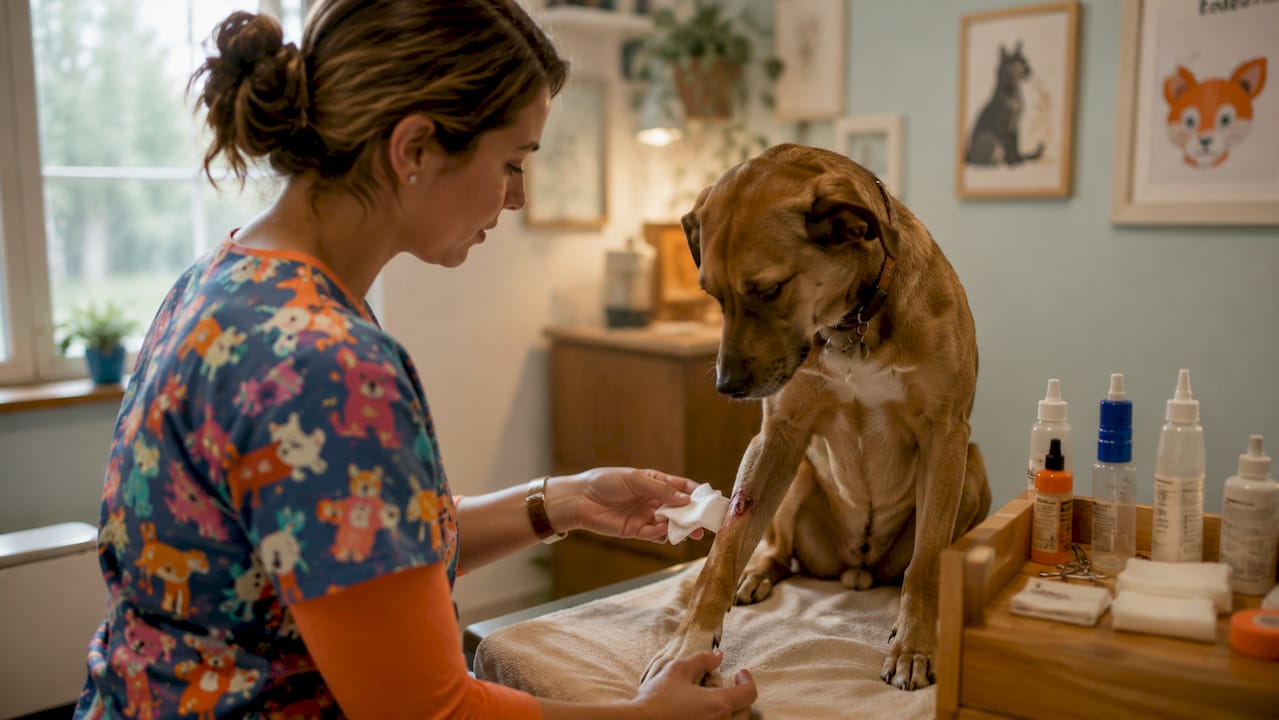
Skin and soft tissue injuries are among the most common reasons pets need urgent care, accounting for about 10% of all emergency vet visits as of 2026. Knowing the right pet skin injury treatment options makes a real difference. Proper wound care reduces pain, lowers infection risk, and shortens recovery time. The key is matching the treatment to the wound. Minor cuts can often be managed at home with the right technique, while deeper injuries need professional care right away.
1. How to assess pet skin injuries before treatment
Accurate assessment is the first step in any pet wound care solution. You need to know what you are dealing with before you apply anything.
Minor wounds suitable for home care share three traits:
Smaller than 0.5 inches in length
Located away from the eyes, joints, or genitals
Bleeding that stops within 10 minutes of firm pressure
Signs that require immediate veterinary attention:
Heavy bleeding that does not slow after 5 minutes of pressure
Visible fat, muscle, or bone beneath the wound
Spreading redness, warmth, or swelling around the site
Puncture wounds, especially from animal bites
Any wound on the face, near a joint, or over the chest
Pro Tip: Even gentle pets can bite when they are in pain. Wrap a calm dog’s muzzle with a soft cloth or use a commercial muzzle before treating any wound. For cats, a thick towel wrapped around the body works well.
2. Stop the bleeding first
Bleeding control comes before cleaning or bandaging. Apply firm, direct pressure for 3–5 minutes without lifting the cloth. Lifting the cloth disrupts clot formation and restarts the process. Use a clean gauze pad or folded cloth. If blood soaks through, add more material on top rather than removing the first layer.
3. Clean the wound properly
Cleaning removes bacteria and debris that cause infection. Use sterile saline solution or clean running water. Rinse the wound gently for 1–2 minutes to flush out dirt and loose material.
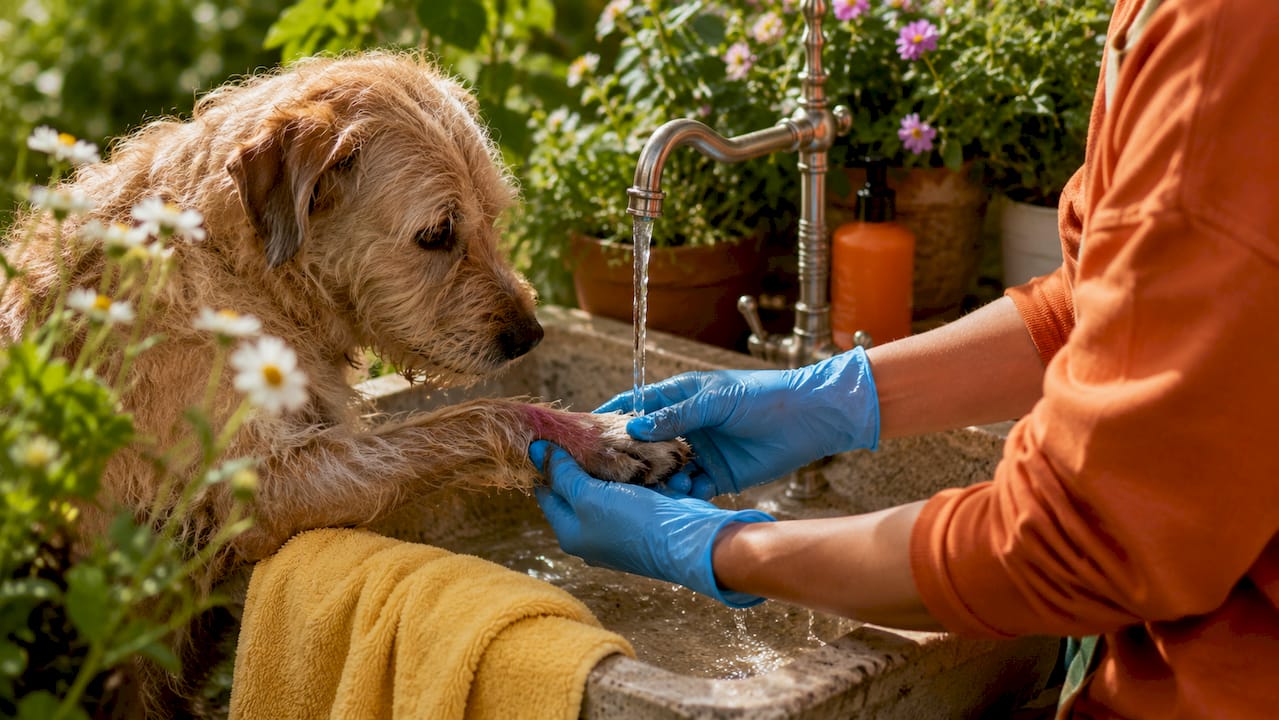
Hydrogen peroxide damages healthy tissue by disrupting the biological processes needed for healing. Alcohol causes the same problem and adds unnecessary pain. Both products feel like they are “doing something” because of the bubbling or stinging, but they slow recovery. Stick to saline.
Pro Tip: Trim the fur around the wound with blunt-tipped scissors if your pet tolerates it. This improves visibility, keeps hair out of the wound, and makes bandaging more effective.
4. Apply a pet-safe antiseptic or ointment
After cleaning, apply a thin layer of a pet-safe antiseptic or wound ointment. Standard human antibiotic ointments may contain ingredients that are toxic if licked. Read labels carefully and choose products formulated specifically for animals.
Human-grade antiseptics and essential oils pose real toxicity risks when pets lick treated areas. This is not a minor concern. Pets groom constantly, so anything on their skin will likely end up in their mouth. Plant-based ointments free of petroleum and synthetic chemicals are a safer choice. Theregenstore’s Re-gen ointment is formulated without petroleum or harsh chemicals, making it a practical option for pet-safe wound care.
5. Bandage the wound correctly
A bandage protects the wound from dirt and reduces the chance of licking. Wrap loosely enough that two fingers slide under the bandage without force. Tight bandages become dangerous as swelling increases after injury. Restricted circulation causes tissue damage that is often worse than the original wound.
Change the bandage at least once daily or whenever it gets wet or dirty. Check the skin around the bandage edges for swelling, color changes, or odor at every change. If the bandage slips or your pet chews at it, use medical tape to secure the edges or consider a soft protective sleeve.
6. Prevent licking and self-trauma
Licking is the most common reason minor wounds become infected. Saliva introduces bacteria and physically disrupts healing tissue. Elizabethan collars are the standard tool for lick prevention. Soft inflatable collars work well for pets that find rigid plastic collars too stressful. For leg wounds, a clean sock secured with medical tape provides a simple barrier.
7. Natural and plant-based remedies for wound healing
Natural treatments for pet wounds have moved beyond folk remedies. Veterinary experts now endorse moisture-balanced wound dressings like hydrogels and medical-grade Manuka honey as superior to traditional dry gauze. These products support granulation tissue growth and provide antimicrobial protection without harsh chemicals.
Safe natural options include:
Medical-grade Manuka honey applied in a thin layer under a bandage
Hydrogel dressings that maintain moisture and reduce pain during changes
Petroleum-free, plant-based ointments with antimicrobial plant extracts
Avoid these on pet wounds:
Tea tree oil and other essential oils (toxic if ingested)
Aloe vera products containing additives or preservatives
Any ointment with zinc oxide (toxic to dogs and cats)
Research into repair peptides in animal tissue is expanding the understanding of how targeted biological compounds support skin recovery. This science reinforces why ingredient quality matters in any wound product you choose for your pet.
Pro Tip: Check the evidence-based natural healing options that Theregenstore has compiled for pet skin care. Not all natural products are equal, and sourcing matters.
8. When veterinary treatment is necessary
Some wounds cannot be managed at home, no matter how careful you are. Veterinary care includes wound debridement, suturing, prescription antibiotics, and pain management. These are not optional extras for serious injuries. They are the standard of care.
Bring your pet to a vet immediately if you observe:
A wound that is deep, gaping, or will not stop bleeding
Any puncture wound, including bites from other animals
Signs of infection: pus, foul odor, increasing redness, or fever
A wound near the eye, ear canal, or a joint
A pet that refuses to bear weight or shows signs of severe pain
Veterinary teams often delay suturing contaminated wounds on purpose. Closing a dirty wound traps bacteria inside and leads to abscess formation. Allowing natural debridement first produces better long-term outcomes. This is a well-established clinical approach, not a delay in care.
9. Monitor healing and know when to return
Healing is a process, not a single event. Check the wound twice daily for the first week. Healthy healing shows gradual reduction in redness, no discharge after the first 24–48 hours, and new pink tissue forming at the edges.
Return to the vet if you notice:
Discharge that is yellow, green, or foul-smelling
Swelling that increases rather than decreases after day two
The wound opening up or edges separating
Your pet becoming lethargic, refusing food, or running a fever
Nutrition supports recovery from the inside. Keep your pet well hydrated and maintain their regular feeding schedule. Protein supports tissue repair, so do not restrict food during healing unless your vet directs otherwise.
10. Preventing skin injuries in the first place
Prevention reduces the need for treatment. Inspect your yard and home for sharp objects, exposed nails, and rough surfaces. Keep grass trimmed to reduce the chance of hidden debris. Check your pet’s paws after walks on gravel, hot pavement, or wooded trails.
Pets that roughhouse with other animals benefit from supervised play and regular coat checks afterward. Long-coated breeds hide small cuts under their fur, so run your hands over the coat after outdoor activity. Catching a wound early means simpler treatment and faster recovery.
Key Takeaways
The most effective approach to pet skin injury treatment combines accurate wound assessment, proper cleaning with saline, and selecting the right product for the wound’s severity and location.
Point | Details |
Assess before treating | Minor wounds under 0.5 inches with controlled bleeding qualify for home care. |
Clean with saline only | Hydrogen peroxide and alcohol damage healing tissue; sterile saline is the safe choice. |
Bandage loosely | Use the two-finger rule to prevent circulation loss from swelling. |
Prevent licking | Elizabethan or soft inflatable collars stop self-trauma that delays healing. |
Know when to see a vet | Puncture wounds, deep cuts, and signs of infection always require professional care. |
What I’ve learned from watching pet owners treat wounds the wrong way
The most common mistake I see is reaching for the medicine cabinet instead of the first aid kit. Pet owners grab hydrogen peroxide because it bubbles, and that bubbling feels like it is working. It is not. It is destroying the very cells your pet’s body is sending to repair the wound.
The second mistake is bandaging too tight. People want to protect the wound, so they wrap firmly. Within hours, the limb swells and the bandage cuts off circulation. A loose wrap that stays clean does far more good than a tight one that feels secure.
What actually works is simpler than most people expect. Clean water or saline, a pet-safe ointment, a loose bandage, and a collar to prevent licking. That combination handles the majority of minor wounds well. The hard part is recognizing when a wound has crossed the line into veterinary territory. Puncture wounds always cross that line. Bite wounds always cross that line. When in doubt, call your vet before treating at home.
Veterinary medicine is also changing. Moisture-balanced dressings and plant-based antimicrobials are replacing dry gauze and harsh antiseptics in clinical practice. That shift reflects real evidence. Pet owners who adopt the same approach at home are ahead of the curve.
— Kyle
Natural wound care products for your pet at Theregenstore
Theregenstore offers plant-based wound care products formulated without petroleum or synthetic chemicals, making them a practical choice for pet owners who want safe, effective options at home.

The Re-gen ointment supports skin and soft tissue recovery with plant-derived ingredients that provide antimicrobial protection without the toxicity risks of human antiseptics. It is designed for use on cuts, scrapes, and minor wounds in both people and animals. Theregenstore also offers guidance on speeding up wound healing naturally and a full range of petroleum-free wound treatment options to match different injury types and healing stages.
FAQ
What is the safest way to clean a pet wound at home?
Rinse the wound with sterile saline solution or clean running water for 1–2 minutes. Avoid hydrogen peroxide and alcohol, as both damage healthy tissue and slow healing.
How do I know if my pet’s wound needs stitches?
Any wound that is deeper than 0.5 inches, gaping, or located near a joint or the face needs veterinary evaluation. Puncture wounds and bite wounds also require professional care regardless of size.
Can I use human antibiotic ointment on my pet?
Most human antibiotic ointments are not safe for pets because they contain ingredients that are toxic if licked. Use only products specifically formulated for animals or verified as pet-safe.
How long does a minor pet skin wound take to heal?
Most minor cuts and scrapes in healthy pets show clear improvement within 5–7 days. Full skin closure typically occurs within two weeks when the wound is kept clean and protected from licking.
What natural remedies are safe for pet wound healing?
Medical-grade Manuka honey and petroleum-free, plant-based ointments are supported by veterinary evidence. Avoid essential oils, aloe products with additives, and any ointment containing zinc oxide.
Recommended
Comments