
Topical healing: Plant-based recovery for skin and pets
- Sunny

- Apr 27
- 8 min read

Topical healing is far more than putting a bandage on a cut. It’s a targeted, science-backed process that supports your skin, muscles, and soft tissues from the outside in. Most people think of wound care as a passive act, but the right topical approach can actively speed up recovery by working with your body’s own repair mechanisms. Whether you’re managing a sprain, a post-surgical wound, or a pet’s hot spot, plant-based topical solutions offer a natural, chemical-free path forward. This guide breaks down how topical healing actually works, which herbal ingredients matter most, and how to apply this knowledge for both human and animal care.
Table of Contents
Key Takeaways
Point | Details |
What topical healing means | Topical healing uses direct skin or tissue application to promote recovery through moisture and targeted ingredients. |
Best plant-based ingredients | Centella, Aloe, Calendula, Comfrey, and Arnica support skin and muscle healing with proven mechanisms. |
Pet-safe herbal solutions | Lick-safe herbs like calendula and manuka honey can help pets recover but monitoring and vet input is vital. |
Critical limitations | Results vary, evidence quality is mixed, and moist environments matter more than any single herbal product. |
Balanced approach | Success depends on combining evidence, proper cleaning, and realistic expectations with plant-based remedies. |
How topical healing works: Science and phases
Topical healing means delivering therapeutic support directly to the skin or tissue surface. The goal isn’t just to protect a wound. It’s to actively support the body’s four biological repair phases.
The four phases of wound healing:
Hemostasis: Blood clotting stops the bleeding within minutes of injury.
Inflammation: White blood cells flood the area to fight bacteria and clear debris.
Proliferation: New tissue forms, collagen is laid down, and the wound contracts.
Remodeling: The new tissue matures and strengthens over weeks or months.
Each phase has specific needs. Disrupting one phase, even with good intentions, can slow the whole process. That’s why what you apply topically matters at every stage.
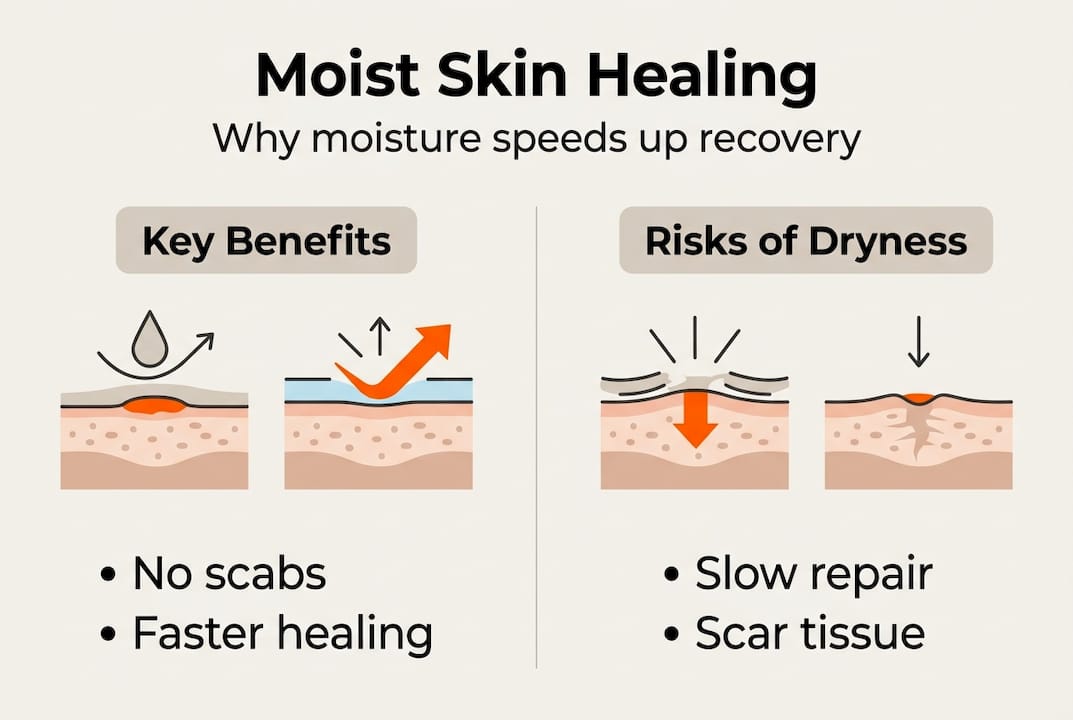
A moist wound environment is one of the most important factors in recovery. Dry wounds form scabs that slow cell migration. Moist environments allow cells to move freely, which speeds up closure. Wound healing science confirms that effective topical care involves antimicrobial action, anti-inflammatory effects, antioxidant protection, collagen synthesis promotion, fibroblast proliferation, angiogenesis, and re-epithelialization working together.
Healing phase | What it needs | How topicals help |
Hemostasis | Clotting support | Astringent herbs, clean environment |
Inflammation | Infection control | Antimicrobial plant compounds |
Proliferation | Collagen and moisture | Herbal emollients, growth factors |
Remodeling | Antioxidant protection | Polyphenols, anti-inflammatory agents |
Plant-based topicals can support multiple phases at once, which is one reason they appeal to people who prefer non-systemic, localized care. Research on speeding up wound healing consistently points to cleaning the wound first, maintaining moisture, and using targeted ingredients that match the healing phase.
“Topical healing optimizes natural recovery via localized delivery, ideal for plant-based users seeking non-systemic options; prioritize cleaning, moist environment.”
Understanding this framework helps you choose the right product at the right time, rather than reaching for whatever is in the medicine cabinet.
Natural plant-based topical remedies: Ingredients and actions
Now that you understand how healing works, let’s explore which natural, plant-based remedies actually support these processes.
Not all herbal ingredients do the same thing. Some reduce inflammation. Others stimulate collagen. A few do both. Knowing which plant does what helps you make smarter choices for your specific injury or skin concern.
Key plant-based ingredients and their actions:
Centella asiatica: Contains asiaticoside, which directly stimulates collagen synthesis and supports wound contraction.
Aloe vera: Provides deep moisturizing and anti-inflammatory effects, ideal for burns and surface wounds.
Calendula: Offers antimicrobial properties and a collagen boost, useful for cuts and abrasions.
Comfrey: Promotes cellular proliferation and speeds tissue regrowth.
Arnica: Reduces bruising and muscle soreness, particularly effective for blunt trauma.
Herbal wound healing approaches show that these plants are typically delivered through ointments, gels, oils, and salves applied directly after cleaning the wound.
Ingredient | Primary action | Best for |
Centella asiatica | Collagen synthesis | Surgical wounds, scars |
Aloe vera | Moisturizing, anti-inflammatory | Burns, dry skin |
Calendula | Antimicrobial, collagen boost | Cuts, abrasions |
Comfrey | Cell proliferation | Tissue regrowth |
Arnica | Anti-bruising, muscle relief | Sprains, bruises |
One of the most important insights from recent research is that plant synergy matters. Combining alkaloids and flavonoids from different plants creates multi-phase support that isolated compounds can’t replicate. Bioavailability research shows that gels and phytosome formulations improve how well plant compounds absorb into skin and muscle tissue.
This is why whole-plant formulas often outperform single-ingredient extracts. You’re not just getting one action. You’re getting a cascade of complementary effects that match what your body needs at each healing stage.
For plant-based wound treatments, application best practices include cleaning the area thoroughly before applying anything, applying a thin, even layer, and repeating two to three times daily depending on wound severity.
Pro Tip: Choose gel-based herbal formulas over thick creams when you want sustained release and better absorption. Gels allow active plant compounds to penetrate deeper into tissue rather than sitting on the surface.
If you’re looking for a natural Neosporin alternative, focus on formulas that combine antimicrobial and collagen-boosting plants rather than relying on a single herb.
Topical healing for pets: Safe plant-based solutions
Plant-based healing isn’t just for humans. Here’s how it works for pets, and what you need to know about safety.

Pets get cuts, hot spots, abrasions, and post-surgical wounds just like people do. The challenge is that many conventional ointments contain ingredients that are toxic if licked. That’s where lick-safe herbal options become essential.
Herbs commonly used for pet wound care:
Manuka honey: Potent antimicrobial action, particularly effective for hot spots and infected skin.
Kawakawa: Anti-inflammatory properties that soothe irritated skin and reduce swelling.
Calendula: Gentle enough for sensitive animal skin, promotes healing and reduces redness.
Lavender: Calming and mildly antimicrobial, useful for surface wounds and skin irritation.
Comfrey: Supports tissue regrowth in dogs and livestock when applied as a salve or oil.
Herbal solutions for pets confirm that these remedies work well for wounds, cuts, and hot spots in dogs and livestock when applied after thorough cleaning.
How to apply herbal topicals to your pet safely:
Clean the wound gently with warm water or a saline rinse.
Pat the area dry with a clean cloth.
Apply a thin layer of the herbal salve or gel.
Use a soft bandage or pet-safe wrap if the animal can reach the area.
Monitor the wound daily for signs of infection, including swelling, discharge, or odor.
Consult your vet if the wound doesn’t improve within 48 to 72 hours.
For a plant-based pet ointment to be effective, it must be safe if ingested in small amounts. Calendula and manuka are the most widely accepted lick-safe options. Avoid essential oils like tea tree or eucalyptus, which are toxic to dogs and cats even in small concentrations.
Pro Tip: Keep a styptic herb like yarrow on hand for minor bleeding wounds in pets. It helps stop bleeding quickly while also providing mild antimicrobial support, buying you time before you can clean and dress the wound properly.
For general soothing pet skin irritation, herbal washes made from diluted calendula tea can be applied with a soft cloth two to three times daily. This is especially helpful for chronic skin conditions between vet visits.
Limitations and evidence: Nuances, risks, and clinical realities
Although plant-based topical healing shows promise, there are real-world limits and risks you should be aware of.
Preclinical research on herbal wound healing is genuinely exciting. One study found that a specific herbal extract achieved 39% improved healing compared to a control gel by day 14, alongside a 66% reduction in oxidative stress markers, a 220% increase in glutathione, and a 94% drop in TNF-alpha, a key inflammatory marker. Those are significant numbers in a controlled setting.
But preclinical results don’t always translate directly to human or animal clinical outcomes.
Key limitations to keep in mind:
Most herbal wound healing studies are conducted in animal models, not human clinical trials.
Evidence quality is inconsistent. Some guidelines note that herbal and honey-based treatments lack the rigorous trial data needed for strong clinical recommendations.
Chronic wounds, particularly in diabetic patients, benefit from moist healing environments but carry a higher infection risk that herbs alone may not adequately address.
Secondary intention healing (where wounds close from the inside out) is slower and produces more scarring, regardless of the topical used.
Cats are particularly sensitive to many plant compounds, including some that are safe for dogs.
Wound healing principles emphasize that over-relying on anti-inflammatory herbs can sometimes slow the inflammation phase, which is actually necessary for proper immune response and debris clearance.
For topical healing comparisons, the honest answer is that no single product works for every wound type. Matching the remedy to the wound stage and severity is more important than brand loyalty.
“Herbal remedies promising in preclinical, but some reviews note poor evidence quality; prefer moist dressings over herbals/honey in complex cases.”
For those managing natural recovery after surgery, plant-based topicals can be a meaningful complement to medical care, but they work best when combined with proper wound hygiene and professional oversight.
A fresh perspective on topical healing: What most guides miss
Let’s step back and consider what most people, and even some experts, miss about topical healing.
There’s a tendency in natural health circles to treat “plant-based” as automatically safe and superior. That’s an oversimplification that can lead to real harm. Infected wounds need infection management first. No herbal formula replaces proper cleaning, debridement, or antibiotics when a wound is actively infected.
The more useful question isn’t “natural or conventional?” It’s “what does this wound need right now?” Sometimes that’s a moist dressing and nothing else. Sometimes it’s a synergistic herbal formula. Sometimes it’s both.
Whole-plant formulas genuinely do outperform isolates in many cases, because the synergy between plant compounds supports multiple healing phases simultaneously. But that advantage disappears if the wound isn’t clean, if infection is present, or if the wrong herb is chosen for the wrong phase.
Expert guidance consistently reinforces that balancing healing promotion with infection prevention is the real skill in wound care. For chronic wounds, diabetic skin, or pet injuries, close monitoring matters more than the specific product you choose. Explore natural healing after surgery) with that mindset: informed, attentive, and flexible.
Explore plant-based healing solutions from The Re-gen Store
You now have a clearer picture of what topical healing involves and how plant-based remedies fit into that process. The next step is finding a formula that actually delivers these benefits in a clean, well-formulated product.
At TheRegenStore.com, Re-gen is a plant-based regenerative ointment designed to support skin, soft tissue, and muscle recovery without synthetic chemicals. For pet owners, the pet wound ointment offers a lick-safe, herbal option for cuts, hot spots, and post-surgical care. If you’re recovering from a procedure, explore after-surgery healing support) to see how Re-gen fits into a natural recovery plan. Clean ingredients, targeted action, and real support for every healing phase.
Frequently asked questions
What exactly does topical healing mean?
Topical healing refers to applying treatments directly to the skin or tissues to optimize local recovery. It works through moisture, antimicrobial, and anti-inflammatory mechanisms that support each phase of the body’s natural repair process.
Which plant-based ingredients are best for topical skin healing?
Centella, Aloe, Calendula, Comfrey, and Arnica are among the most effective, each targeting different aspects of healing including collagen production, inflammation reduction, and cellular regrowth.
Are plant-based topical remedies safe for pets?
Many are safe when used correctly. Lick-safe herbs like calendula and manuka are preferred for pets, but you should always consult a vet if the wound shows signs of infection or doesn’t improve within a few days.
Do herbal topicals work better than conventional ointments?
It depends on the wound. Herbal remedies show promise in preclinical studies, but some clinical guidelines favor moist dressings over herbal or honey-based products for complex or infected wounds.
Recommended
Comments