
Skin Regeneration Steps 2026: Your Advanced Recovery Guide

Skin regeneration is defined as the biological process by which the body replaces damaged or aging skin cells with new, healthy tissue. For intact skin, this means a 28-day renewal cycle that slows to 40–50 days after age 30. For injured skin, it means a coordinated four-phase repair sequence that can span more than a year. The skin regeneration steps 2026 practitioners and dermatologists recommend now combine evidence-based daily routines, device-driven collagen stimulation, and plant-based healing support to produce results that older single-step approaches simply cannot match.
What are the biological phases of skin regeneration?
Understanding the skin regeneration process starts with separating two distinct mechanisms. The first is the ongoing turnover of intact skin. The second is the phase-driven repair that follows injury. Clinicians differentiate between these two processes because blending them incorrectly leads to mismanaged care.
For intact skin, the renewal cycle replaces surface cells continuously. UV exposure, chronic stress, poor sleep, and hormonal shifts all slow this cycle. Menopause-related collagen thinning, for example, directly worsens regeneration speed and quality.
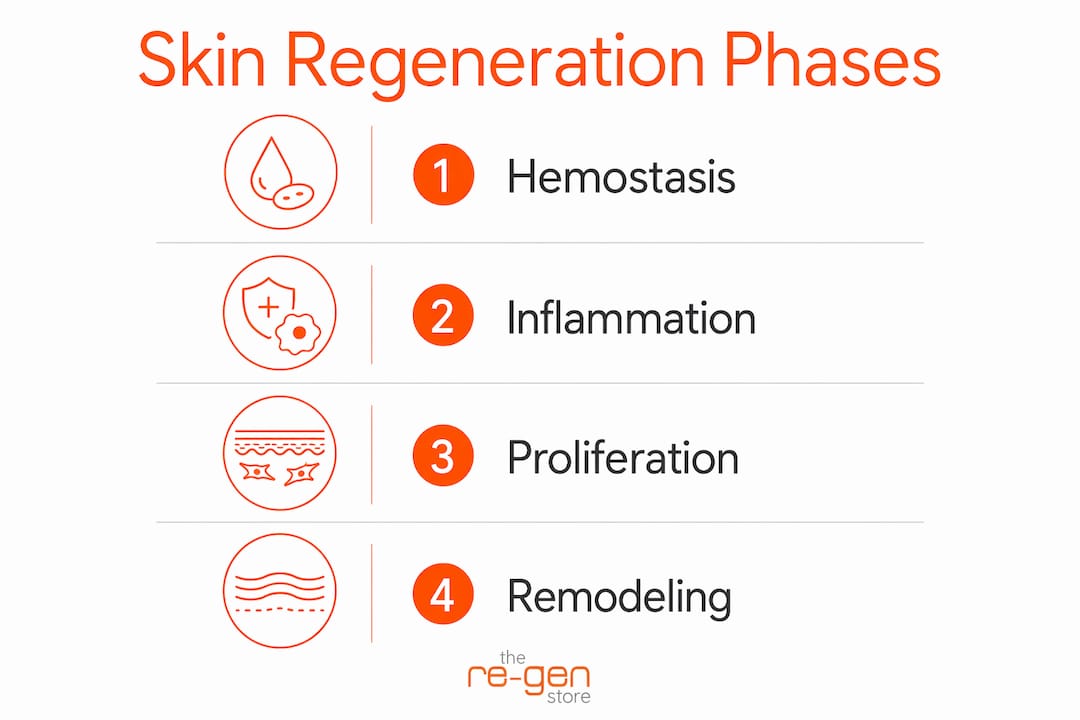
Wound repair follows four sequential but overlapping phases:
Hemostasis. Blood vessels constrict and platelets form a clot within minutes of injury. This stops bleeding and creates the scaffold for repair.
Inflammation. Immune cells flood the wound site to clear bacteria and debris. This phase can last up to two weeks, and its proper resolution is critical. Immune cells must transition from pro-inflammatory to anti-inflammatory states to allow the next phase to begin.
Proliferation. New collagen fibers form, blood vessels regrow, and the wound closes with fresh tissue. This phase typically runs from day 4 through week 6.
Remodeling. The new tissue matures and strengthens. Remodeling can persist for a year or longer after the wound appears closed.
Chronic wounds fail because they get stuck in the inflammation phase. Effective skin healing methods restore proper phase transitions rather than simply accelerating one step. That distinction matters for anyone managing a slow-healing wound or post-procedural skin.
How can you support skin barrier regeneration through daily routines?
The skin barrier repair routine recommended by dermatologists in 2026 is deliberately short. Complexity is the enemy of consistency, and consistency is what drives results.
Your daily steps for skin rejuvenation at home should follow this structure:
Cleanse gently, once or twice daily. Use a fragrance-free, low-pH cleanser. Over-cleansing strips the barrier and extends the redness and dryness that slow regeneration.
Moisturize damp skin immediately. Apply moisturizer within 60 seconds of washing. Damp skin absorbs humectants like glycerin and hyaluronic acid more effectively, locking in hydration before evaporation begins.
Apply broad-spectrum SPF 30+ every morning. SPF measures UVB protection specifically. Broad-spectrum coverage adds UVA defense. Reapplication every two hours during sun exposure is non-negotiable for regenerating skin.
Avoid harsh scrubs, alcohol-based toners, and multiple exfoliants. Layering active ingredients disrupts the barrier and triggers unnecessary inflammation.
Use retinol or a botanical antioxidant serum at night. These support cellular turnover without the barrier disruption that stronger acids cause.
Avoiding excess irritation is as important as adding the right products. Skin that is constantly inflamed cannot complete its renewal cycle efficiently.
Pro Tip: The best sunscreen is the one you apply consistently every day. Formulation improvements in 2026 focus on texture and wearability specifically to improve daily adherence.
What procedural techniques accelerate skin regeneration in 2026?
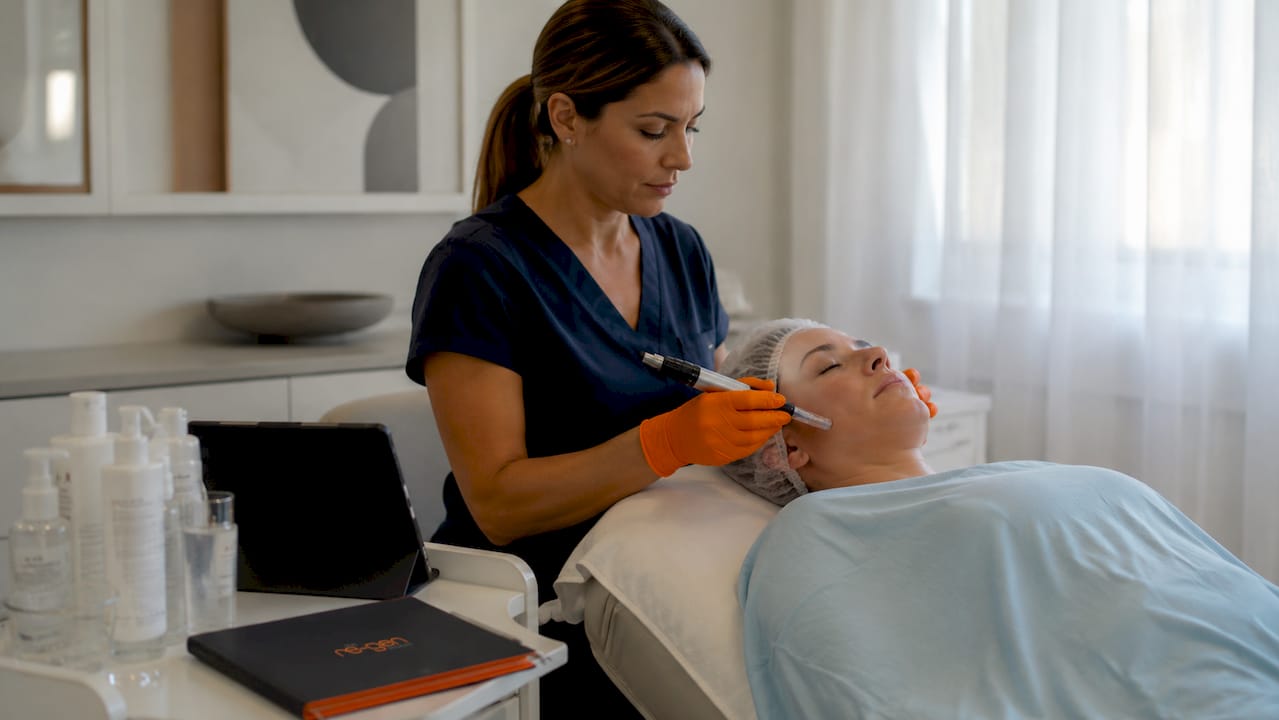
Device-driven treatments represent the most significant 2026 skincare trends in clinical skin renewal. These procedures work by creating controlled micro-injury, which triggers the body’s own collagen remodeling response.
Procedure | Mechanism | Downtime |
Microneedling | Creates micro-channels to stimulate collagen; sessions spaced 4–6 weeks apart | 1–3 days |
Fractional CO2 laser | Ablates columns of tissue to force deep remodeling | 3–5 days |
Ablative CO2 laser | Full-surface resurfacing for significant photoaging | 10–14 days |
Radiofrequency (RF) | Heats dermis to contract collagen fibers | Minimal |
Chemical peels | Controlled acid exfoliation at varying depths | 2–7 days |
Combining these procedures with biologics produces stronger results than either approach alone. Platelet-rich plasma (PRP), exosomes, polynucleotides, and skin boosters are now routinely paired with microneedling and laser sessions. PRP therapy delivers concentrated growth factors directly into the treatment zone, accelerating the proliferation phase.
Advanced research is also exploring engineered collagen biologics, including recombinant human collagen, to preserve epidermal-dermal integrity and reduce transepidermal water loss. These represent the next generation of latest skin repair innovations beyond what current devices can achieve alone.
Treatment intensity must match your skin’s specific concerns. Aligning modality with individual needs balances regeneration benefits against downtime and irritation risk. A single aggressive ablative session on sensitive skin can set recovery back by weeks.
Pro Tip: Start with microneedling before committing to fractional laser. It gives your skin a chance to demonstrate how it responds to controlled injury, and it builds the collagen foundation that makes laser results last longer.
What natural and nutritional strategies boost skin regeneration?
Nutrition is a direct input into the skin regeneration process, not a background factor. The body cannot build new collagen without adequate raw materials.
Protein provides the amino acids glycine, proline, and hydroxyproline that form collagen fibers. Inadequate protein intake visibly slows wound closure.
Vitamin C is required for collagen cross-linking. Without it, newly formed collagen fibers are structurally weak.
Omega-3 fatty acids regulate inflammation. They help the immune system transition out of the pro-inflammatory state that stalls healing.
Sleep is when growth hormone peaks and cellular repair accelerates. Chronic sleep deprivation measurably slows the skin renewal cycle.
Stress reduction lowers cortisol, which otherwise degrades collagen and impairs barrier function.
Botanical oils and antioxidants such as rosehip oil, sea buckthorn, and vitamin E protect new skin cells from oxidative damage during the remodeling phase.
Hormonal balance also plays a direct role. Menopause accelerates collagen loss and slows renewal. Addressing hormonal health is a legitimate part of any complete skin recovery plan, not a cosmetic afterthought.
Key takeaways
Effective skin regeneration requires coordinating daily barrier care, nutritional support, and procedural stimulation across all four healing phases.
Point | Details |
Know your phase | Intact skin renewal and wound repair are distinct processes that require different approaches. |
Daily routine first | Gentle cleansing, barrier moisturizing, and SPF 30+ form the non-negotiable foundation of skin health. |
Procedures need sequencing | Match treatment intensity to skin type and space sessions to allow full collagen remodeling between visits. |
Nutrition drives repair | Protein, vitamin C, and omega-3 fatty acids are structural requirements for collagen formation, not optional supplements. |
Remodeling takes time | Visible healing is not the finish line. Scar maturation and tissue strengthening continue for a year or more. |
Why patience is the most underrated skin regeneration strategy
I’ve seen people invest in fractional laser, PRP, and expensive biologics, then undo months of progress by returning to a harsh scrub routine two weeks post-procedure. The science is clear: remodeling continues long after the skin looks healed. Disrupting that phase with irritants or aggressive actives is one of the most common and costly mistakes in skin recovery.
My honest recommendation is to start conservatively. Microneedling before laser. Barrier repair before retinol. A simple SPF routine before any device treatment. This sequencing lets you identify how your skin responds at each level before adding intensity.
The readers who get the best long-term results are not the ones who do the most. They are the ones who protect their skin between treatments as carefully as they choose the treatments themselves. Consistency in your daily routine is what allows procedural results to compound over time. Without it, you are essentially rebuilding the same foundation repeatedly.
You can learn more about step-by-step skin healing with natural remedies if you want a practical framework for the recovery periods between clinical sessions.
— Kyle
Natural support for your skin’s recovery process
Theregenstore specializes in plant-based, petroleum-free products designed to support skin and soft tissue recovery at every stage of the healing process.

Re-gen, Theregenstore’s flagship ointment, uses herbal ingredients to support the skin’s natural repair cycle without the chemical load that disrupts sensitive or regenerating tissue. It fits naturally into post-procedural care, daily wound management, and barrier recovery routines. For anyone looking for a petroleum-free wound treatment that works alongside the techniques covered in this article, Re-gen is a practical and well-supported option. Theregenstore also offers transdermal magnesium and spray formulations for broader tissue recovery support.
FAQ
How long does the skin regeneration process take?
Intact skin renews in roughly 28 days for younger adults and 40–50 days after age 30. Wound healing spans 4–6 weeks for surface closure, with remodeling continuing for a year or more.
What are the four phases of wound healing?
The four phases are hemostasis, inflammation, proliferation, and remodeling. They overlap and must progress in sequence for complete skin repair.
What daily steps support skin barrier regeneration?
Gentle cleansing, moisturizing damp skin promptly, and applying broad-spectrum SPF 30+ every morning are the three core daily steps backed by dermatological evidence in 2026.
Does nutrition affect how fast skin regenerates?
Yes. Protein, vitamin C, and omega-3 fatty acids directly support collagen synthesis and inflammation regulation. Deficiencies in any of these slow measurable healing outcomes.
What is the best procedural treatment for skin regeneration?
Microneedling is the most accessible starting point, with sessions spaced 4–6 weeks apart. Fractional laser and RF treatments offer deeper remodeling for more advanced concerns, often combined with PRP for enhanced collagen response.
Recommended
Comments