
How to soothe skin irritation naturally: safe, effective steps


Skin irritation has a way of demanding your full attention. Whether it’s the persistent itch of a rash, the sting of a healing wound, or the red, inflamed patch your dog keeps scratching, the discomfort is hard to ignore. Many people reach for the first cream they find, only to discover that synthetic fragrances, alcohols, or harsh antibiotics make things worse. The good news is that science-backed, natural remedies can calm irritated skin safely for the whole family, including your pets. This guide walks you through exactly what to use, how to apply it, and when to pay closer attention.
Table of Contents
Key Takeaways
Point | Details |
Oatmeal and aloe work fast | Colloidal oatmeal and aloe vera give rapid, soothing relief and also help repair the skin barrier. |
Keep wounds moist | Moisture and a breathable barrier prevent scarring and help skin recover, especially after surgery. |
Try herbal options cautiously | Advanced botanicals like kanuka and indigo work well but test new products on a small area first to prevent reactions. |
Pets need lick-safe remedies | Use only proven lick-safe herbal balms for pets, and see a vet for severe or spreading skin problems. |
Prepare: What you need to soothe irritated skin
With the problem defined, let’s gather safe, science-backed supplies before you start.
Getting the right materials together before you begin makes a real difference. Reaching for the wrong product in a moment of discomfort can delay healing or trigger a secondary reaction. The goal here is to support your skin’s natural barrier while reducing inflammation, not to strip or overwhelm it.
Essential natural supplies
Here is what you want to have on hand for both human and pet skin care:
Colloidal oatmeal: Finely ground oats suspended in water or cream. Colloidal oatmeal soothes dry, itchy, irritated skin by reducing inflammation through compounds called avenanthramides, while also forming a protective barrier on the skin’s surface.
Aloe vera gel: Pure, fragrance-free aloe cools and hydrates. It works especially well on sunburned or inflamed skin.
Coconut oil: A gentle moisturizer with mild antimicrobial properties. Best used after cleansing, not on open wounds.
Herbal balms with calendula, chamomile, or comfrey: Calendula and chamomile balms soothe pet skin irritations and hot spots effectively, especially when the formula is lick-safe.
Soft, clean towels: Pat dry only. Rubbing irritated skin increases inflammation.
Cool, clean water: Your first line of defense for most irritation events.
What to avoid
Some ingredients actively worsen skin irritation. Watch out for:
Synthetic fragrances and dyes
Alcohol-based products (they strip the skin barrier)
Antibiotic ointments used without medical guidance
Products with parabens or sulfates on broken skin
For pets specifically, always confirm a product is lick-safe before applying it anywhere your animal can reach. Many human-grade essential oils, including tea tree and eucalyptus, are toxic to dogs and cats.
You should also consider whether food triggers for skin issues may be contributing to chronic irritation. Internal inflammation from food sensitivities can show up on the skin’s surface, making topical treatment alone insufficient.
Ingredient | Human use | Pet use | Key benefit |
Colloidal oatmeal | Yes | Yes (lick-safe) | Anti-inflammatory, barrier repair |
Aloe vera gel | Yes | Limited (check label) | Cooling, hydrating |
Calendula balm | Yes | Yes (lick-safe formula) | Soothing, anti-inflammatory |
Coconut oil | Yes | Yes (in small amounts) | Moisturizing, mild antimicrobial |
Alcohol-based products | No | No | Damages skin barrier |
Pro Tip: Before applying any new product to your pet, dab a small amount on a patch of skin and wait 24 hours. Pets cannot tell you when something stings or burns, so a patch test is your best early warning system.
For more on soothing skin irritation naturally, including ingredient breakdowns, TheRegenStore offers detailed guidance on barrier-first approaches.
Step-by-step: Easing irritation for healthy skin
Now that you’re prepared, follow these proven steps for gentle, effective relief.
The order in which you treat irritated skin matters more than most people realize. Applying a moisturizer before cleansing traps bacteria. Skipping the cool compress phase and going straight to a heavy ointment can hold heat in the skin. Follow these steps carefully for the best outcome.
Step 1: Gentle cleansing
Use lukewarm water and a fragrance-free, soap-free cleanser. Rinse thoroughly and pat dry with a soft towel. For pets, use a vet-approved gentle shampoo or plain water for spot cleaning.

Step 2: Apply a cool compress
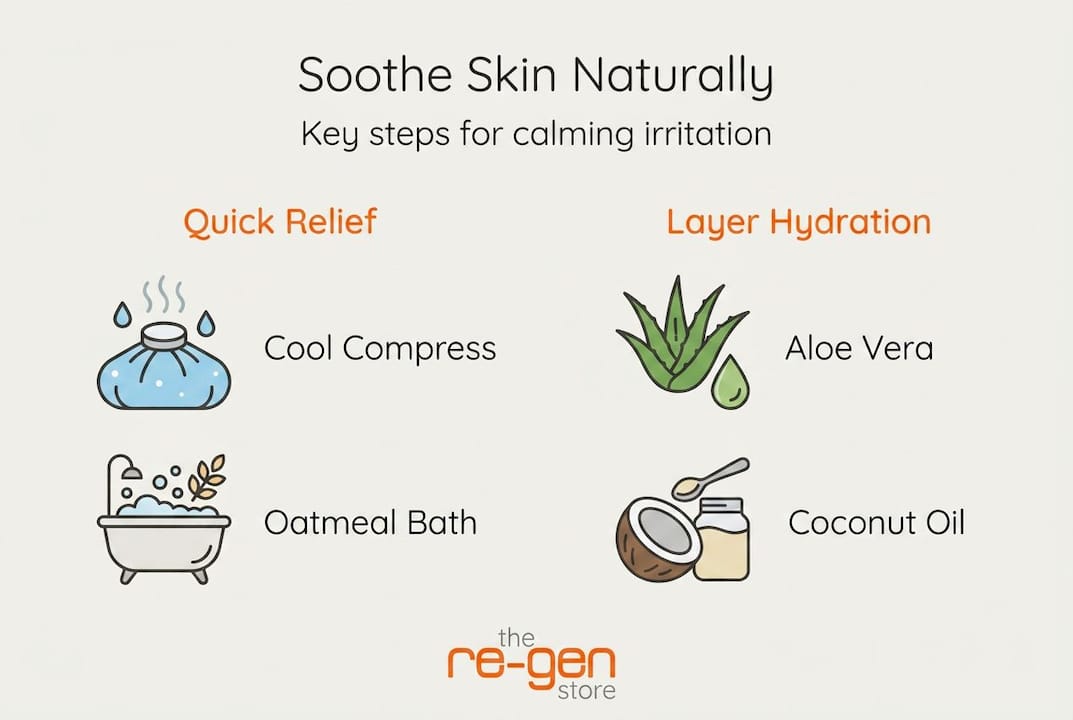
Cool compresses reduce inflammation and the burning sensation in irritated skin quickly. Soak a clean cloth in cool (not ice cold) water, wring it out, and hold it gently against the affected area for 10 to 15 minutes. Repeat up to three times per day during the acute phase.
Step 3: Oatmeal bath for widespread irritation
If irritation covers a large area of the body, an oatmeal bath is one of the most effective options available. Add one cup of colloidal oatmeal to a lukewarm bath and soak for 15 to 20 minutes. Colloidal oatmeal reduces atopic dermatitis symptoms by up to 40% and improves skin hydration while reducing itch, including in children. For pets, a diluted oatmeal rinse works well on the coat and skin.
Step 4: Layer on protective hydration
Apply aloe vera gel first for its cooling, anti-inflammatory effect. Once absorbed, follow with coconut oil or a plant-based barrier ointment to lock in moisture. This two-layer approach addresses both immediate discomfort and longer-term barrier repair.
Step 5: Apply herbal balm and monitor
Finish with a calendula or chamomile-based herbal balm. These botanicals have well-documented anti-inflammatory and wound-supportive properties. For pets, make sure the balm is specifically labeled lick-safe. Check the area every 12 hours for signs of improvement or worsening.
Stage | Action | Frequency |
Cleanse | Gentle, fragrance-free wash | 1 to 2 times daily |
Compress | Cool water cloth application | Up to 3 times daily |
Oatmeal soak | Full bath or rinse | Once daily during flare |
Hydration layer | Aloe then coconut oil or ointment | After each cleanse |
Herbal balm | Calendula or chamomile application | 2 times daily |
Pro Tip: Avoid applying thick ointments immediately after a hot shower. The skin is still warm and may not absorb the product as effectively. Wait five minutes, then apply while skin is still slightly damp for better penetration.
If your irritation started after sun exposure, explore sunburn cooling methods that combine botanical ingredients with barrier repair for faster recovery.
If you regularly deal with skin irritation after shaving, the same principles apply. Learning about repairing skin after shaving can help you prevent the cycle of recurring micro-inflammation.
Special cases: Post-surgery and delicate skin recovery
Some situations need extra care, especially after procedures or injuries.
Post-operative skin is not the same as everyday irritated skin. The barrier has been intentionally disrupted, and the body is working hard to close and rebuild tissue. The wrong approach here can increase infection risk, slow healing, or leave more noticeable scarring.
Key principles for post-surgical skin care
Keep the wound moist. Dry wounds form thick scabs that can actually slow healing and increase scarring. Post-operative wounds heal better when kept moist with a barrier like petroleum jelly, covered, and cleaned gently on a regular schedule.
Cleanse carefully. Use saline solution or clean water. Avoid hydrogen peroxide or iodine on healing wounds unless your doctor specifically recommends it.
Protect from sun exposure. UV rays darken healing scar tissue significantly. Keep the area covered or use SPF 30 or higher once the wound has fully closed.
Watch for infection. Redness that spreads beyond the wound edge, warmth, swelling, pus, or fever are signs that home care is no longer enough.
“Moisture is the single most important factor in minimizing post-surgical scarring. A well-hydrated wound heals faster, with less pigment disruption, than one left to dry out.” This principle guides nearly every modern wound care protocol.
For children and people with fragile or thin skin, such as elderly individuals or those on long-term corticosteroids, the same steps apply but require even gentler handling. Use only the softest materials, apply minimal pressure, and check the wound more frequently.
For more detailed guidance on supporting healing after surgery with natural ingredients, TheRegenStore covers the key steps in a practical format.
Additional plastic surgery recovery tips from clinical sources reinforce that gentle, consistent care outperforms aggressive treatment every time.
If you want to go further and understand the biology behind tissue repair, learning about speeding up wound healing naturally gives you a clearer picture of what your body needs at each stage.
Next-level relief: Advanced herbal and clinical options
If standard approaches aren’t enough, these advanced herbal and scientific options offer real hope.
Sometimes basic remedies plateau. Chronic skin conditions like atopic dermatitis (eczema) or persistent hot spots in pets may need a more targeted botanical approach. The good news is that research into plant-based alternatives has grown significantly, and some options now rival conventional treatments in clinical settings.
Kanuka oil
Kanuka oil comes from the New Zealand kanuka tree and has shown strong results in clinical trials. Kanuka oil 3% cream improved standardized skin severity scores more effectively than hydrocortisone 1% cream in patients with mild atopic dermatitis, with the difference reaching statistical significance. This is meaningful because hydrocortisone is the standard first-line treatment many doctors recommend.
Kanuka oil works through a combination of anti-inflammatory and antimicrobial mechanisms. It does not thin the skin the way steroids can with prolonged use, making it a safer long-term option for many people.
Indigo naturalis
Derived from plants in the Indigofera family, indigo naturalis has been used in traditional Chinese medicine for centuries. Modern research confirms its value. Indigo naturalis oil reduced eczema severity scores from 6.6 to 3.4 in clinical testing, while also shifting the skin’s microbiota (the community of microorganisms living on the skin) in a favorable direction. A healthier skin microbiota supports long-term barrier function.
Polyherbal blends
Formulas that combine multiple botanicals, such as calendula, comfrey, and chamomile, can address several aspects of skin irritation at once. Patch-testing any new blend before full application is essential, even with natural ingredients. Apply a small amount to the inner forearm, wait 24 to 48 hours, and check for any reaction before using it more broadly.
Option | Best for | Key evidence | Patch test needed |
Kanuka oil | Mild to moderate eczema | Outperformed hydrocortisone 1% | Yes |
Indigo naturalis | Chronic eczema, microbiota support | EASI score reduced significantly | Yes |
Calendula blend | General irritation, pets | Strong traditional and clinical use | Yes |
Colloidal oatmeal | Widespread itch, children | 40% symptom reduction in studies | No |
For pets with persistent skin issues, consult a veterinarian before introducing advanced botanicals. Some herbal concentrates are not appropriate for animals even when they are safe for humans.
Exploring plant-based wound treatments gives you a practical starting point for understanding how these ingredients work together in a formulated product.
Rethinking skin relief: Why less is often more
With so many remedies available, it’s worth pausing to reconsider what truly works.
Here is something that clinical results keep confirming but marketing rarely emphasizes: the skin heals best when you stop interfering with it. The most common mistake people make is layering product after product, switching formulas every few days, or reaching for something stronger the moment improvement slows down.
Barrier repair is the real goal. Not instant itch relief. Not rapid cosmetic improvement. When you support the skin’s natural protective layer with simple, well-chosen ingredients and then give it time, the results are consistently better than aggressive, multi-step interventions. We see this pattern repeatedly in the research on atopic dermatitis, post-surgical wounds, and pet skin conditions.
The risks of over-treating are real. Frequent product switching can disrupt the skin microbiota, cause sensitization reactions, and actually extend the duration of a flare. Steady, consistent application of one trusted formula outperforms the frantic search for a faster fix.
Trust your body’s cues. If the skin is less red, less itchy, and starting to feel softer after three to five days, that is progress. Stay the course. If it is getting worse, that is the signal to seek professional advice, not to add another product.
For a broader look at what better first aid healing actually looks like in practice, simpler approaches consistently deliver more reliable outcomes than complex ones.
Discover safe, effective relief with Re-gen solutions
If you’re ready to take the next step, plant-based options make it easy to care for your entire household.
Re-gen from TheRegenStore bridges the gap between traditional herbal wisdom and modern skin science. The plant-based regenerative ointment is formulated without petroleum, synthetic antibiotics, or harsh chemicals, making it a trusted option for cuts, burns, post-operative wounds, and chronic skin irritation.
For your pets, the pet wound ointment is specifically designed to be lick-safe and gentle on animal skin, giving you a reliable option for hot spots, minor injuries, and post-procedure care. Explore the full range of petroleum-free wound care options to find the right fit for your family’s needs, whether you’re managing a healing incision, a skin flare, or a pet’s persistent irritation.
Frequently asked questions
What is the safest remedy for severe skin irritation?
Cool compresses reduce inflammation and burning quickly, and fragrance-free barrier ointments support healing. Seek medical care right away if skin is blistered, infected, or getting worse despite home treatment.
Can I use the same treatment for my pet’s skin irritation as for my own?
Not always. Calendula and comfrey balms are safe for pets when the formula is lick-safe, but many human skin products contain ingredients that are toxic to animals. Always check the label before applying anything to your pet.
How fast do natural remedies like oatmeal or aloe vera work?
Oatmeal and aloe vera can bring noticeable relief within the first day of use, but oatmeal baths show the best barrier improvement with consistent, ongoing use rather than a single application.
Is petroleum jelly safe after surgery?
Yes. Keeping wounds moist with petroleum jelly, covering them, and cleaning gently is the recommended approach for minimizing post-surgical scarring and supporting steady healing.
When should I skip home remedies and see a doctor?
Stop home treatment and seek medical attention immediately if you notice spreading redness, pus, swelling, fever, or if the irritation continues to worsen after several days of consistent care.
Recommended
How to Soothe Skin Irritation and Support Healing Naturally | The Re-gen Store
How to Treat Diaper Rash Naturally (And Help Skin Heal Faster) | The Re-gen Store
How to Repair Skin After Shaving (And Prevent Irritation) | The Re-gen Store
How to Heal Road Rash Faster Without Harsh Chemicals | The Re-gen Store
Comments