
Chemical-Free Skincare Tips 2026: Your Natural Routine Guide

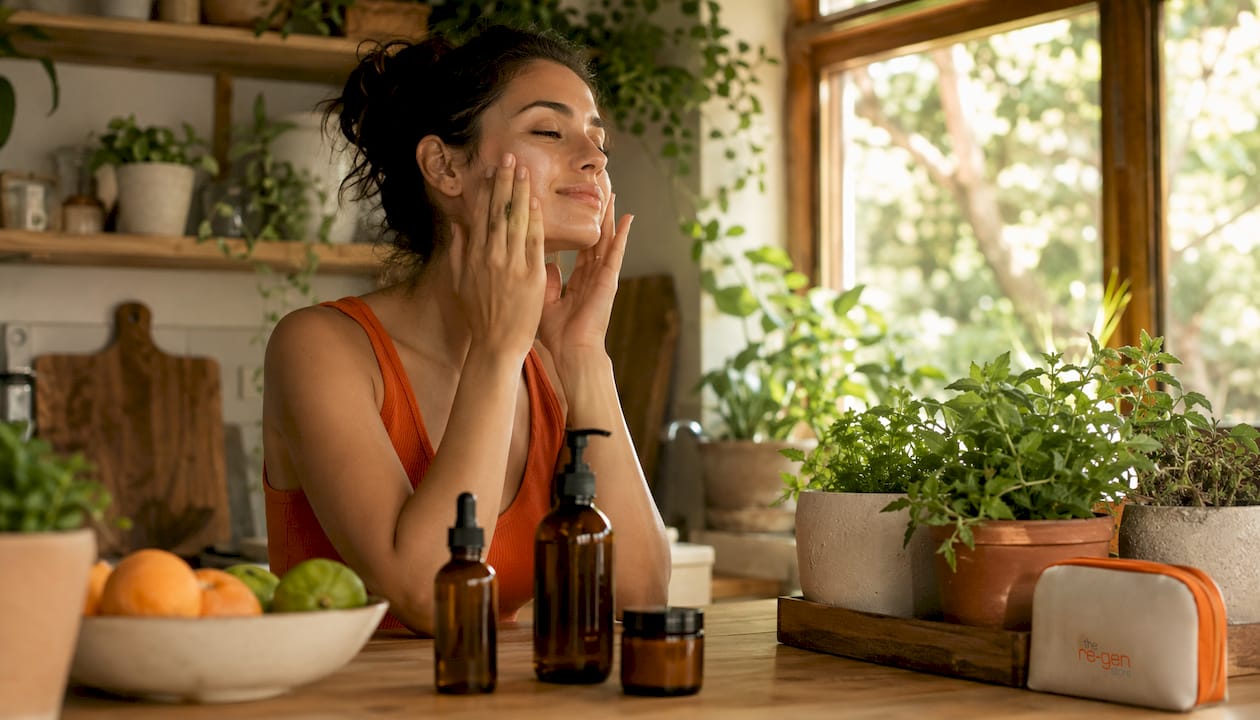
Chemical-free skincare is defined as a practice that avoids synthetic chemicals, harsh preservatives, and artificial fragrances in favor of plant-based, minimally processed ingredients that support the skin’s natural barrier. The 2026 skincare paradigm has shifted decisively toward this approach, driven by growing awareness of inflammaging, a term describing the chronic low-grade inflammation that accelerates visible skin aging. These chemical-free skincare tips 2026 give you a practical, science-backed framework for building a natural routine that actually works, whether your skin is oily, dry, sensitive, or somewhere in between.
1. What are the core principles of a chemical-free skincare routine?
A chemical-free routine works best when it stays simple. Minimalist routines with 3–4 well-chosen products outperform elaborate 10-step sequences for skin barrier health and fewer irritations. Fewer products mean fewer opportunities for synthetic ingredients to disrupt your skin.
The foundational principles are:
Use a gentle, plant-based cleanser suited to your skin type
Apply products from thinnest to thickest consistency
Avoid synthetic fragrances, parabens, and sulfates in every product you choose
Read ingredient lists, not just front-label claims
Give your skin time to respond before adding new products
Pro Tip: If a product lists “fragrance” or “parfum” as a single ingredient, it may contain dozens of undisclosed synthetic compounds. Choose products that name every scent source individually, such as lavender essential oil or rose water.
The order you apply products matters as much as what you use. Layering from water-based to oil-based products seals moisture in and maximizes absorption. Skipping this step wastes even the best botanical ingredients.
2. Which natural oils work best for your skin type?
Plant-based oils are the workhorses of any natural skincare routine. Each oil has a unique fatty acid profile and comedogenic rating that makes it better suited to certain skin types.
Oil | Best Skin Type | Key Benefit |
Kalahari Melon Seed Oil | Oily, combination | Low comedogenic rating (0–1), regulates sebum |
Marula Oil | Dry, mature | Rich in oleic acid, deeply moisturizing |
Rosehip Seed Oil | Sensitive, aging | High in linoleic acid, supports cell renewal |
Jojoba Oil | All skin types | Mimics skin’s natural sebum, balances oil production |
Sea Buckthorn Oil | Dry, damaged | High in omega-7, supports skin repair |
Kalahari Melon Seed Oil absorbs quickly without greasiness and helps regulate sebum production, making it a strong choice for oily and combination skin. Its high linoleic acid content also supports the skin barrier without clogging pores.
Choose oils with a comedogenic rating of 0–2 for oily or acne-prone skin
Opt for oleic-acid-rich oils like Marula for dry or mature skin
Patch test every new oil on your inner arm before applying to your face
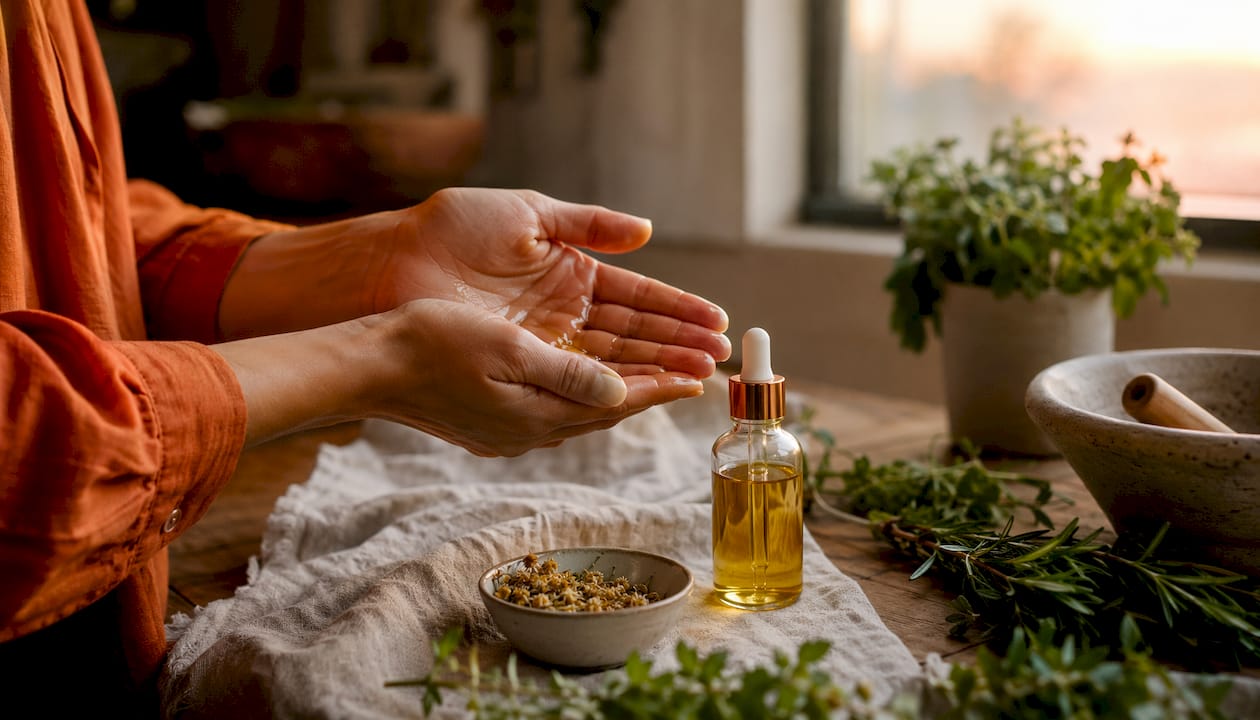
Pro Tip: Warm one to two drops of facial oil between your palms before pressing it gently onto your skin. This activates the oil’s absorption and avoids dragging or pulling at the skin.
3. How to build a simple morning and evening natural routine
A natural skincare routine does not need to be complicated. The goal is consistent, gentle care that supports your skin barrier every day.
Morning routine:
Rinse with cool water or use a gentle plant-based cleanser
Apply a water-based serum if needed (hyaluronic acid or aloe vera gel)
Press a few drops of facial oil suited to your skin type onto damp skin
Finish with a mineral SPF 30 or higher
Evening routine:
Double cleanse if you wore SPF or makeup: start with an oil cleanser, follow with a gentle foam or gel cleanser
Apply any treatment serums (vitamin C, niacinamide from natural sources)
Use a richer botanical oil or plant-based balm to seal in moisture overnight
Seasonal adjustments matter. In winter, add a layer of a thicker plant-based cream between your serum and oil. In summer, reduce oil quantity and prioritize lightweight hydration. Your skin’s needs shift with humidity and temperature, so your routine should too.
Switching to chemical-free products may trigger a 2–4 week adjustment period with transient dryness or minor breakouts. This is your skin recalibrating after years of synthetic ingredients. Stay consistent and resist adding new products during this window.
4. How sensorial skincare supports your skin and mental wellness
The 2026 sensorial beauty trend is not just about how a product feels. It is about how that feeling affects your body’s stress response. Elevated cortisol measurably impairs the skin barrier, and sensorial formulations that calm the nervous system directly support skin health.
“Sensorial beauty formulations that offer soothing textures and scents measurably reduce cortisol and improve skin barrier function under stress. Skincare that feels good is skincare that works better.”
Practical ways to add sensorial benefits without compromising your clean routine:
Choose products with natural scents from essential oils like lavender, chamomile, or frankincense
Use slow, upward massage strokes during application to stimulate lymphatic drainage
Apply your evening routine in a quiet, low-light environment to signal relaxation to your nervous system
Select textures that feel satisfying to you, whether that is a silky oil, a whipped balm, or a gel
The ritual of application is as important as the ingredients. Mindful skincare practice reduces stress hormones, and lower stress means a stronger, more resilient skin barrier.
5. How to spot hidden chemicals and misleading labels
Many products labeled “natural” still contain synthetic preservatives or fragrances. The term “chemical-free” has no regulated legal definition in the United States, which means any brand can use it without meeting a specific standard.
Watch for these red flags on ingredient lists:
“Fragrance” or “parfum” listed as a single ingredient
Phenoxyethanol, a synthetic preservative common in “natural” products
PEGs (polyethylene glycols), which are petroleum-derived emulsifiers
Sodium lauryl sulfate or sodium laureth sulfate in cleansers
Methylisothiazolinone, a preservative linked to skin sensitization
Certifications add a layer of accountability. Look for USDA Organic, COSMOS Organic, or EWG Verified seals, which require third-party verification of ingredient sourcing and formulation standards. No certification is perfect, but they reduce the risk of greenwashing significantly.
Reading ingredient lists is a skill worth building. Ingredients appear in descending order by concentration. If a synthetic ingredient appears in the top five, it makes up a meaningful portion of the formula. For deeper guidance on avoiding chemical creams and understanding what safer skin actually requires, Theregenstore’s resource library covers the topic in practical detail.
6. Why skin longevity is the defining 2026 skincare goal
The 2026 skincare paradigm has moved away from anti-aging as a goal and toward skin longevity, which means reducing chronic low-grade inflammation to preserve barrier function and visible health over decades. This is not a cosmetic trend. It reflects a biological understanding of how skin ages at the cellular level.
Inflammaging operates through pathways like NF-κB signaling and IL-6 cytokine activity, both of which synthetic chemicals and environmental stressors can activate. Choosing chemical-free skin treatment steps reduces the daily inflammatory load your skin carries. That reduction compounds over time.
Skin is also a reflection of systemic health. The metabolic beauty trend integrates topical care with lifestyle factors like gut health, sleep, and hormonal balance. A clean skincare routine supports this approach by removing one source of chronic irritation from your body’s total burden. The role of botanicals in skincare in 2026 extends beyond surface-level hydration into genuine barrier repair and anti-inflammatory support.
Key Takeaways
The most effective chemical-free skincare routine in 2026 combines minimalist botanical formulations, correct product layering, and consistent daily practice to reduce inflammaging and support long-term skin health.
Point | Details |
Keep routines minimal | Three to four well-chosen plant-based products outperform complex multi-step regimens. |
Layer products correctly | Apply water-based products first, then oils, then SPF to maximize absorption and barrier protection. |
Choose oils by skin type | Match oil selection to your skin’s fatty acid needs and comedogenic tolerance for best results. |
Expect a transition period | Allow 2–4 weeks for your skin to recalibrate when switching from synthetic to natural products. |
Verify label claims | Look for third-party certifications like USDA Organic or EWG Verified to confirm ingredient integrity. |
What I’ve learned from years of watching the clean beauty space evolve
The shift toward skin longevity is the most honest thing the skincare industry has done in decades. For years, the anti-aging category sold the idea that you could reverse time with a cream. Skin longevity says something more truthful: you can protect what you have, slow the damage, and support your skin’s own repair systems. That framing changes everything about how you choose products.
What I keep seeing is that people overcomplicate the transition. They swap a 12-step synthetic routine for a 12-step “natural” one and wonder why their skin is angry. The answer is almost always to do less. Three products, applied consistently, with ingredients your skin recognizes, will outperform any elaborate regimen.
The sensorial piece is underrated. Skincare that you genuinely enjoy using gets used every day. That consistency is worth more than any single ingredient. If your routine feels like a chore, you will skip it. If it feels like a moment of calm in your day, you will protect it.
Patience is the hardest part. The 2–4 week adjustment window feels long when your skin is acting up. But the skin that comes out the other side of that transition is more balanced, less reactive, and more resilient. That result is worth the wait.
— Kyle
Natural plant-based skin support from Theregenstore
If your skin needs more than daily maintenance, whether from a cut, a burn, or post-procedure recovery, your routine needs a product that matches your clean skincare values.
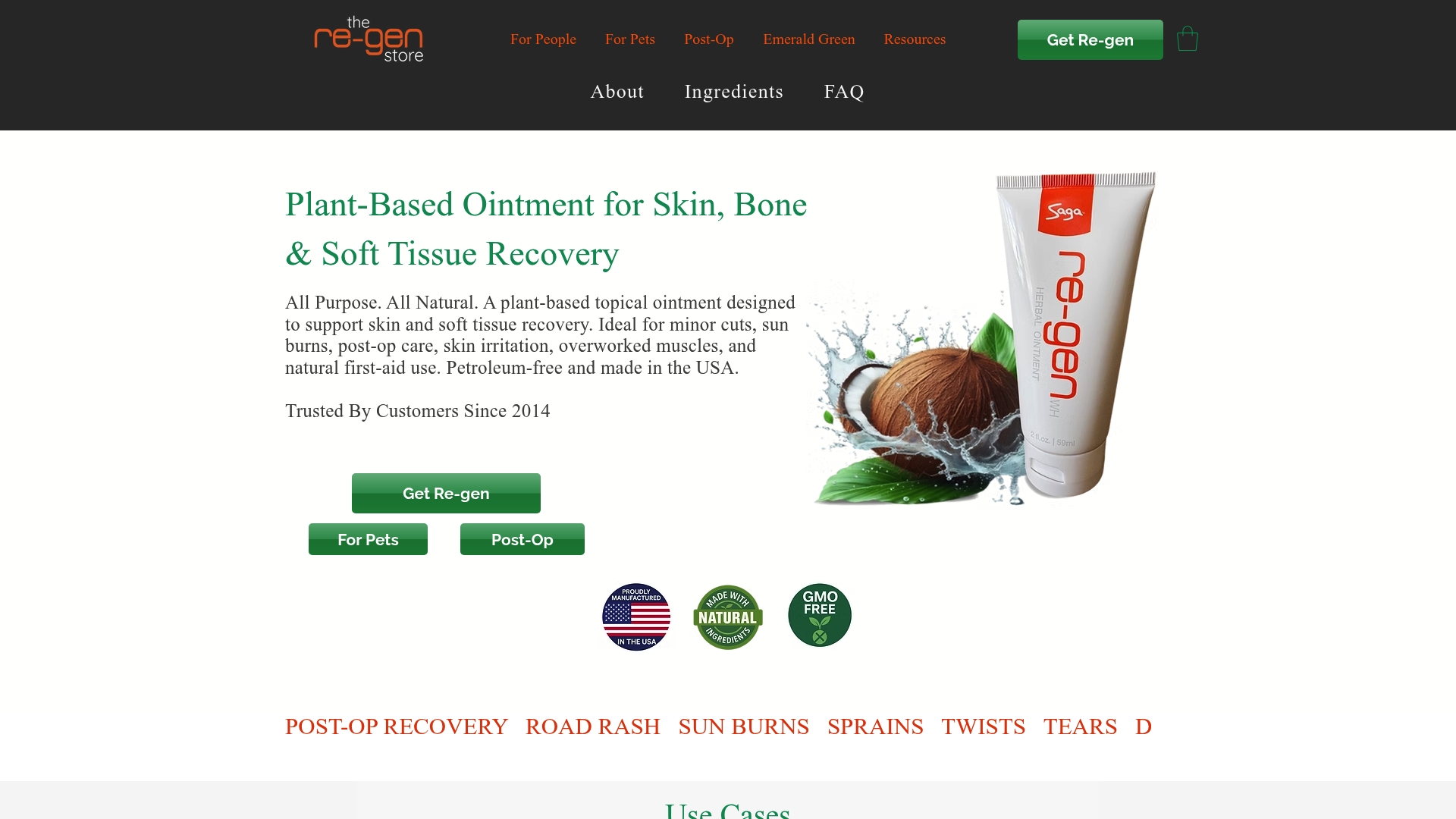
Theregenstore’s Re-gen ointment is a petroleum-free, plant-based formula designed to support skin recovery without synthetic chemicals. It works as a natural alternative to conventional antibiotic ointments, supporting the body’s own healing process with botanical ingredients. For anyone building a genuinely chemical-free regimen, Re-gen fits where conventional first-aid products do not. You can also explore the full Re-gen plant-based ointment page for ingredient details, usage guidance, and sizing options.
FAQ
What does “chemical-free skincare” actually mean?
Chemical-free skincare refers to routines that avoid synthetic chemicals, artificial fragrances, and harsh preservatives in favor of plant-based or minimally processed ingredients. The term has no legal definition in the US, so reading ingredient lists and looking for third-party certifications remains the most reliable approach.
How many products do I need in a natural skincare routine?
A minimalist routine of 3–4 products, typically a cleanser, a facial oil, and SPF, delivers better barrier support than elaborate multi-step sequences. Adding products one at a time also makes it easier to identify what your skin responds to.
What is inflammaging and why does it matter for skincare?
Inflammaging is chronic low-grade inflammation that accelerates skin aging at the cellular level. The 2026 skincare focus on reducing inflammaging through barrier-supportive, chemical-free formulations addresses the root cause of many visible aging signs rather than masking them.
How long does it take to see results from a natural skincare routine?
Most people experience a 2–4 week adjustment period when switching to chemical-free products, during which temporary dryness or minor breakouts can occur. Consistent use of gentle, plant-based products typically produces noticeable improvement in skin texture and balance within 6–8 weeks.
How do I know if a “natural” product is genuinely chemical-free?
Check the full ingredient list for synthetic preservatives like phenoxyethanol, PEGs, and unlisted “fragrance.” Look for certifications from USDA Organic, COSMOS Organic, or EWG Verified as independent verification of ingredient standards.
Recommended
Comments