
Burn Treatment Checklist: First Aid and Natural Healing

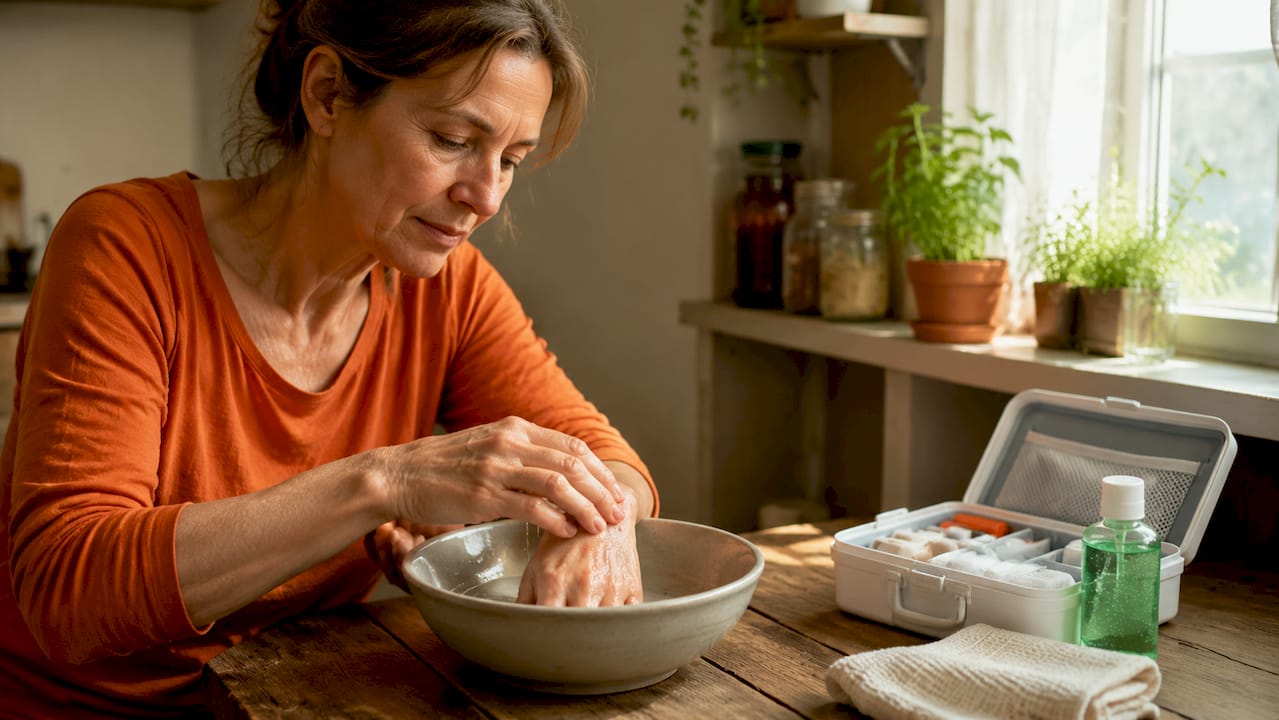
A burn treatment checklist is a structured, step-by-step guide for managing burn injuries from the moment of contact through the full recovery process. Getting the first steps right matters more than most people realize. The four core actions — cool, clean, cover, and comfort — form the backbone of every effective burn care guide, and skipping or rushing any one of them increases the risk of deeper tissue damage, infection, and scarring. This article walks you through each step, explains how to assess burn severity, and covers natural healing options that support recovery safely.
1. What the burn treatment checklist covers
The burn treatment checklist is built around four non-negotiable steps: cool the burn with 15 to 20°C water for 20 minutes, clean the wound gently with mild soap and water, cover it with a sterile non-stick dressing or plastic wrap applied lengthwise, and comfort the person with over-the-counter pain relief. Each step has a specific purpose, and the order matters. Cooling stops the burning process at the tissue level. Cleaning reduces bacterial load before you seal the wound. Covering protects against contamination. Comforting addresses pain and prevents shock.

2. Immediate first aid steps for burns
Follow these burn treatment steps in sequence. Speed is critical, especially in the first 30 minutes.
Remove the person from the source. Stop the burning process first. Turn off the heat, remove the person from contact with chemicals or electricity, and make sure you are safe before helping.
Cool the burn immediately. Run cool tap water at 59 to 68°F (15 to 20°C) over the burn for 20 minutes. The golden window is within 30 minutes of injury. Cooling after 3 hours offers minimal protection, so act fast.
Remove tight items before swelling starts. Remove jewelry and tight clothing near the burn gently and promptly. Do not remove clothing that is stuck to the burn, as pulling it away causes further damage.
Clean the wound gently. Use mild soap and cool water. Avoid scrubbing. Pat dry with a clean cloth.
Cover with a sterile dressing. Use a non-stick sterile dressing or plastic cling wrap applied lengthwise, not wrapped around the limb. This protects the wound without restricting blood flow.
Take over-the-counter pain relief. Ibuprofen or acetaminophen reduces pain and inflammation. Follow standard dosing instructions.
Avoid harmful home remedies. Never apply butter, toothpaste, oil, or ice to a burn. These trap heat, introduce bacteria, and worsen tissue damage.
Pro Tip: Keep a bowl of cool water nearby during cooking or outdoor activities. Immediate cooling within the first few minutes reduces burn depth significantly.
3. How to assess burn severity and when to seek care
Burn injury assessment uses a classification system based on depth and total body surface area (TBSA). Understanding this system helps you decide whether home care is appropriate or whether emergency treatment is needed.
First-degree burns affect only the outer skin layer (epidermis). Redness, minor swelling, and pain are typical. Sunburns usually fall here.
Second-degree burns reach the second skin layer (dermis). Blisters, deep redness, and intense pain indicate partial-thickness injury.
Third and fourth-degree burns are full-thickness injuries. Skin may appear white, brown, or charred. Pain may be absent because nerve endings are destroyed.
The Rule of Nines estimates TBSA by assigning percentages to body regions: the head is 9%, each arm is 9%, each leg is 18%, the front torso is 18%, and the back torso is 18%. This guides treatment decisions quickly. Partial-thickness burns covering 15% or more TBSA in adults, or 10% or more in children, require emergency care and often fluid resuscitation with Hartmann’s solution. Seek immediate medical attention for burns to the face, hands, feet, or genitals, for any full-thickness burn, for chemical or electrical burns, and for any signs of inhalation injury such as singed eyebrows, hoarse voice, or difficulty breathing.
You can also review burn classifications in detail to better understand which treatment path applies to your situation.
4. Natural and plant-based options for burn healing
Natural treatments play a genuine supporting role in burn recovery, particularly for minor first and second-degree burns. They are not a replacement for proper first aid or professional care for serious injuries.
Aloe vera soothes inflammation and keeps the wound surface moist, which supports faster cell regeneration. Use pure gel, not scented lotion products.
Cocoa butter helps maintain skin hydration during the later stages of healing, reducing the risk of tight, dry scar tissue.
Plant-based regenerative ointments like Re-gen from Theregenstore provide petroleum-free moisture retention and support tissue repair without synthetic chemicals. These are a practical alternative to conventional antibiotic ointments like Neosporin for minor burns.
Nutrition supports healing from the inside. Protein, vitamin C, and zinc all contribute to collagen production and immune defense during recovery.
Traditional home remedies like butter and toothpaste are harmful because they trap heat in the tissue and introduce bacteria. The evidence is clear: these remedies delay healing and increase infection risk. For a full breakdown of safe options, Theregenstore’s natural burn care guide covers what works and what to avoid.
Pro Tip: Apply aloe vera or a plant-based ointment only after the burn has been properly cooled and cleaned. Applying anything to an uncooled burn seals in heat and worsens the injury.
5. How to dress and protect burns to prevent infection
Proper dressing is one of the most overlooked parts of a burn care guide. The right technique protects the wound, supports healing, and prevents the complications that turn a minor burn into a serious one.
Use sterile, non-adherent dressings. Gauze that sticks to the wound tears new tissue when removed. Non-adherent pads or plastic wrap applied lengthwise prevent this and allow for swelling without creating a tourniquet effect.
Change dressings every 24 to 48 hours for minor burns, or sooner if the dressing becomes wet, dirty, or loose.
Do not break blisters. Intact blisters act as a natural barrier against infection. If a blister breaks on its own, clean it gently and apply an antibiotic or plant-based ointment before covering.
Monitor for infection signs. Increased redness, swelling, pus, or worsening pain after the first 48 hours are warning signs. Seek medical attention if any of these appear.
Avoid fluffy or fibrous materials. Cotton wool and similar materials shed fibers into the wound. Use only smooth, sterile dressings.
Warning sign | What it means |
Increasing redness spreading outward | Possible infection spreading beyond the wound |
Pus or cloudy discharge | Bacterial infection present, medical review needed |
Fever above 101°F (38.3°C) | Systemic infection risk, seek care promptly |
Wound not healing after 2 weeks | May indicate deeper injury or complications |
For guidance on natural wound protection methods, Theregenstore’s natural wound care guide covers dressing choices and infection prevention using plant-based approaches.
Key takeaways
Effective burn care requires immediate cooling within 30 minutes, correct wound coverage, and ongoing monitoring to prevent infection and support full recovery.
Point | Details |
Cool within 30 minutes | Run 59 to 68°F water over the burn for 20 minutes to limit tissue damage. |
Avoid harmful remedies | Never apply butter, toothpaste, oil, or ice. These worsen burn injuries. |
Assess severity early | Use burn depth and TBSA to decide if emergency care is needed. |
Dress correctly | Use non-adherent dressings or plastic wrap lengthwise to prevent infection. |
Support healing naturally | Aloe vera, cocoa butter, and plant-based ointments aid recovery for minor burns. |
What I’ve learned about burns that most guides get wrong
Burns are one of those injuries where the instinct to do something immediately can actually cause harm. I’ve seen people reach for ice, butter, or toothpaste because it feels like they’re helping. The reality is that keeping the patient warm while cooling only the wound is just as important as the cooling itself. Prolonged full-body cooling, especially in children and older adults, creates a real risk of hypothermia. The wound needs cool water. The rest of the person needs a blanket.
The other thing most guides understate is the psychological side. A calm, reassuring presence reduces the perception of pain and helps prevent shock. That’s not soft advice. It’s a clinical reality. Panic raises heart rate and blood pressure, which increases blood loss and swelling. Staying calm and keeping the person calm is part of the treatment.
Finally, burns that don’t show clear improvement within two weeks need professional review. Deeper injuries are not always obvious in the first 24 hours. What looks like a second-degree burn can reveal itself as full-thickness once the initial swelling settles. Follow up. Don’t assume a wound is healing just because it isn’t getting worse.
— Kyle
Support your recovery with plant-based wound care from Theregenstore
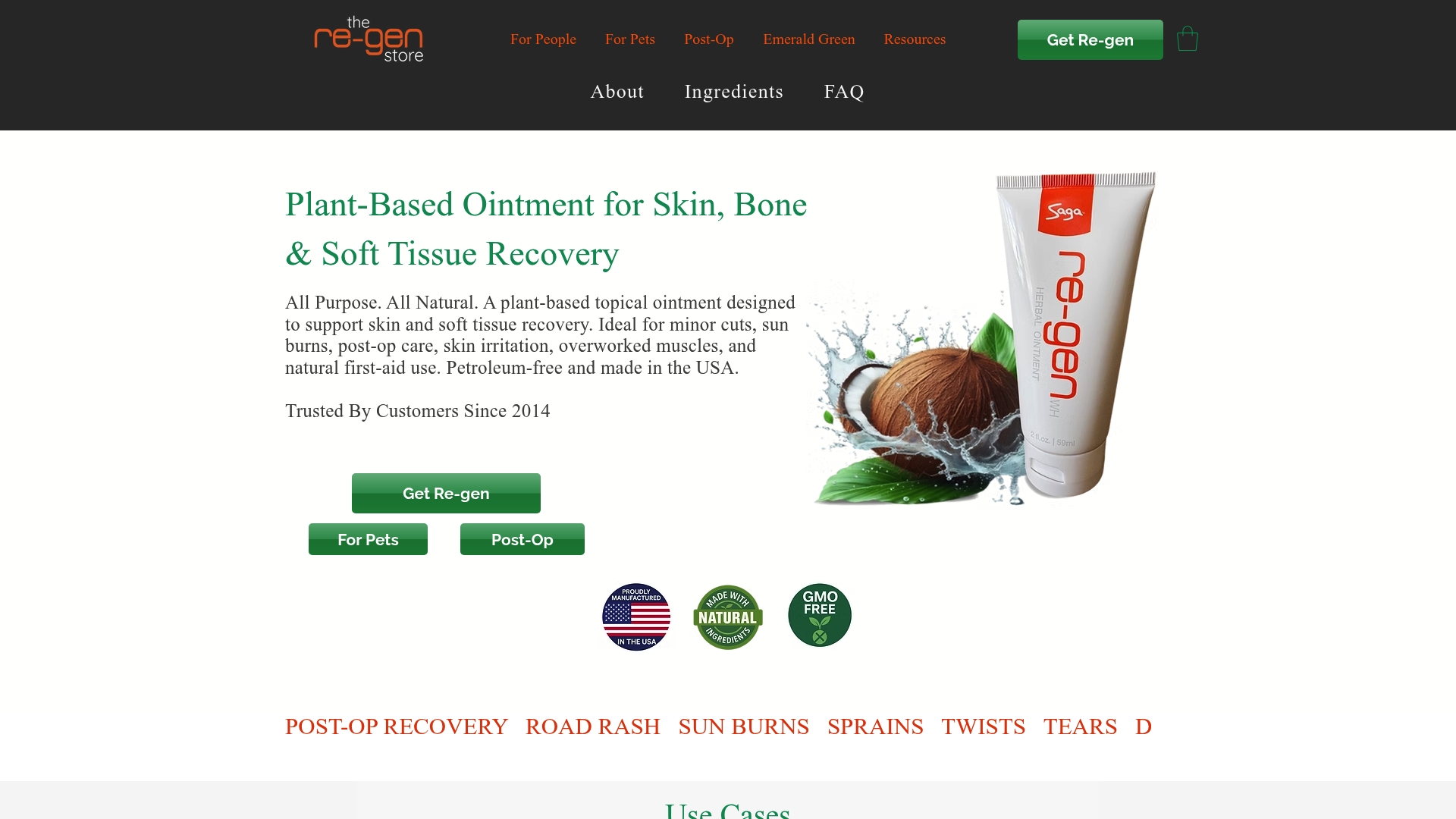
Once you’ve completed the immediate first aid steps, the recovery phase begins. Theregenstore’s Re-gen ointment is a petroleum-free, plant-based formula designed to support skin and tissue repair without synthetic chemicals. It retains moisture, supports the body’s natural regeneration process, and works as a practical alternative to conventional antibiotic ointments for minor burns. You can explore the full range of plant-based wound treatments to find the right option for your recovery. For major burns, always consult a medical professional first. Re-gen is designed for supportive care during the healing phase, not as a replacement for emergency treatment.
FAQ
What is the first thing to do for a burn?
Run cool water at 59 to 68°F over the burn for 20 minutes within 30 minutes of injury. This is the single most effective step to limit tissue damage and reduce pain.
Can you use home remedies for burns?
Safe options include aloe vera and plant-based ointments applied after proper cooling and cleaning. Butter, toothpaste, oil, and ice are harmful and should never be used on burns.
When should you go to the emergency room for a burn?
Seek emergency care for full-thickness burns, burns covering large body surface areas, burns to the face, hands, feet, or genitals, and any chemical or electrical burn.
How do you know if a burn is infected?
Signs of infection include increasing redness spreading from the wound, swelling, pus, and worsening pain after the first 48 hours. A fever above 101°F also indicates possible systemic infection.
How long does a minor burn take to heal?
Most first-degree burns heal within 3 to 5 days. Superficial second-degree burns typically heal within 2 weeks with proper care and clean dressing changes.
Recommended
Comments