
5 Evidence-Based Natural Healing Examples for Skin & Pets


With so many products marketed as “natural,” separating genuine healing remedies from clever marketing is harder than it should be. Whether you’re recovering from surgery, managing a skin wound, or looking for safe options for your dog or cat, the stakes are real. The good news is that a growing body of clinical research now supports specific plant-based and natural remedies for skin repair, soft tissue recovery, and animal wound care. This article walks you through five evidence-backed examples, gives you a clear framework for evaluating what you find, and helps you match the right remedy to your specific situation.
Table of Contents
Key Takeaways
Point | Details |
RCTs prove effectiveness | Bee products and aloe show strong evidence for skin wound healing in major clinical studies. |
Post-op herbs offer modest benefits | Arnica, bellis, and bromelain speed recovery and reduce pain after surgery but are less supported than skin remedies. |
Pet remedies need expert oversight | Herbal sprays and botanicals help animals heal, but safety depends on veterinary guidance. |
Choose by context | The best natural healing option depends on your specific wound, soft tissue injury, or pet’s condition. |
Check for evidence | Always seek scientifically proven, peer-reviewed remedies for maximum safety and results. |
How to evaluate natural healing remedies: Key criteria
Not every remedy labeled “herbal” or “natural” is backed by solid science. Before you try anything on a wound, a surgical incision, or your pet, it helps to understand what separates a well-studied remedy from one that simply sounds convincing.
Start with the type of evidence. Randomized controlled trials (RCTs) are the gold standard. In an RCT, participants are randomly assigned to receive either the remedy or a placebo, which removes bias and produces more reliable results. Anecdotal evidence, meaning personal stories or testimonials, can point you toward interesting options, but it cannot confirm that a remedy actually works. NCCIH notes inconsistent evidence for many herbal products in skin conditions, which is a useful reminder to ask for the research before you commit.
Key criteria to look for when evaluating any natural remedy:
Published peer-reviewed studies, ideally RCTs
Clear dosing and application guidelines
Known safety profile for the specific user, whether adult, child, or pet
Transparency about ingredients and sourcing
No claims of curing serious diseases without clinical backing
Match the remedy to the wound type. A remedy that works well for a minor cut may not be appropriate for a post-surgical natural healing context. Post-operative wounds involve deeper tissue layers, sutures, and a higher infection risk. Skin surface wounds like abrasions or minor burns have different needs than inflamed soft tissue injuries.
Red flags to watch for:
No ingredient list or vague labeling
Claims of instant or miraculous results
No guidance on when to see a doctor or vet
Products that discourage professional medical care entirely
For pets, the bar is even higher. Animals metabolize compounds differently than humans do, and some botanicals that are safe for people are toxic to dogs or cats. Always verify safe plant-based wound care options with a veterinarian before applying anything to an animal’s wound.
Pro Tip: When researching a remedy, search for it on PubMed alongside the word “RCT” or “clinical trial.” If you find nothing, that’s important information.
Arnica, Bellis, and Bromelain: Clinical options for post-operative healing
Now that you know what to look for, let’s look at clinical examples starting with herbal and enzyme remedies for surgical recovery.
Three natural compounds have received meaningful clinical attention for post-operative recovery: Arnica montana (a flowering plant), Bellis perennis (the common daisy), and bromelain (an enzyme derived from pineapple stems). Each works through a different mechanism, but all three target the inflammation and fluid buildup that slow recovery after surgery.
How they work and what the research shows:
Arnica montana is most commonly used as a topical gel or oral homeopathic preparation. It contains helenalin, a compound with anti-inflammatory properties. Studies suggest it reduces bruising and swelling when applied soon after a procedure.
Bellis perennis is often paired with arnica in homeopathic formulations. Research shows that the combination of arnica and bellis perennis reduces seroma formation after mastectomy, shortening drain time by 18% and lowering opioid intake in post-surgical patients.
Bromelain is taken orally and works by breaking down proteins involved in inflammation. A clinical study found that bromelain supplementation reduces postoperative swelling, pain, and drainage, and when combined with other nutraceuticals, reduces narcotic use by 41% and drainage by 48% after abdominoplasty.
“Reducing opioid use after surgery by 41% with a natural supplement is a clinically significant finding, not a minor footnote.” — Reconstructive surgery research, 2020
Comparison: Arnica/Bellis vs. Bromelain for post-op recovery
Feature | Arnica and Bellis | Bromelain |
Form | Topical or oral homeopathic | Oral supplement |
Primary benefit | Reduces bruising, seroma, opioid use | Reduces swelling, drainage, pain |
Evidence quality | Modest clinical trial support | RCT-supported, stronger evidence |
Best use | Post-mastectomy, bruise reduction | Abdominoplasty, general post-op |
Cautions | Avoid on open wounds; check allergies | Avoid with blood thinners |
Who should use caution:
People on anticoagulants (blood thinners) should avoid bromelain without medical guidance
Those with ragweed allergies may react to arnica
Pregnant women should consult a doctor before using any of these remedies
You can also explore healing bruises naturally for more targeted guidance on bruise recovery after procedures. If you’re preparing for a surgical procedure and want to plan your natural surgical recovery) approach, starting with bromelain and arnica is a reasonable, evidence-informed step.
Pro Tip: Bromelain is best taken on an empty stomach for anti-inflammatory effects. Taking it with food shifts its action toward digestive support instead.
Bee products and botanicals: Honey, propolis, and aloe for skin wounds
Moving beyond surgery, let’s look at natural skin healers that work across age groups and conditions.
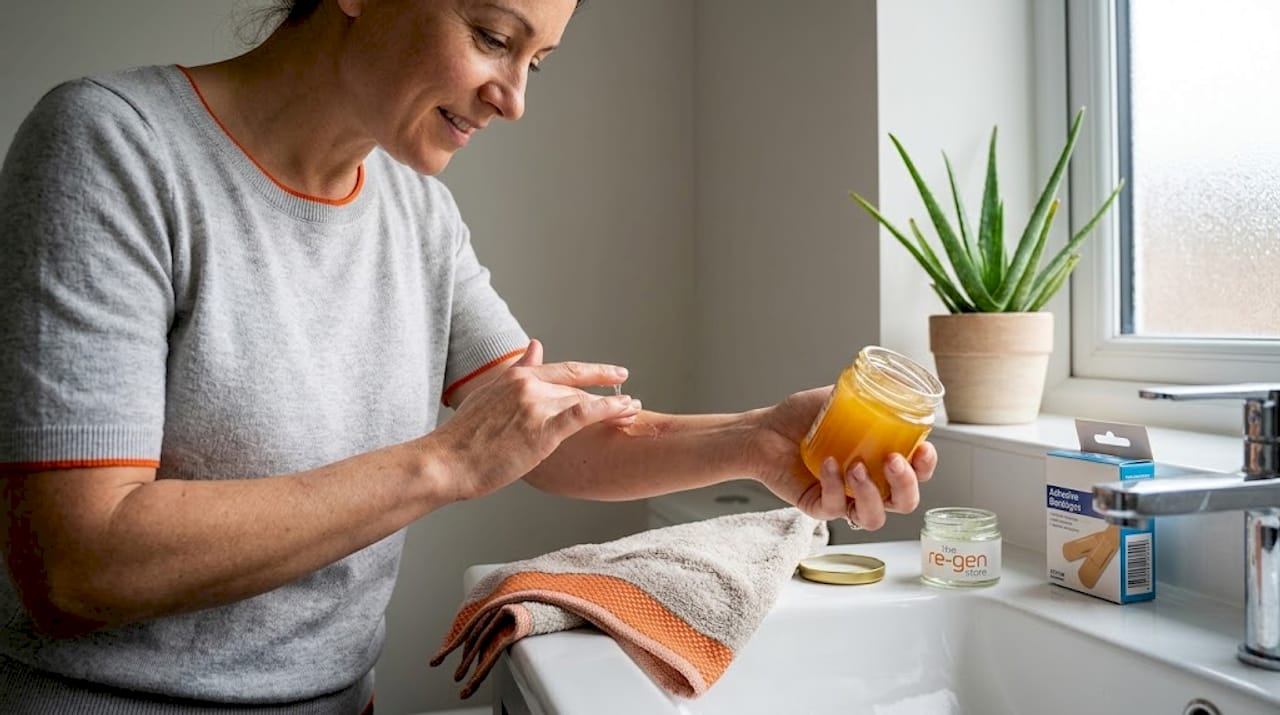
Honey, propolis, and aloe vera are among the most studied natural remedies for wound care. Each brings a distinct set of properties that support different phases of tissue repair.
What makes these ingredients effective:
Honey creates a moist wound environment, which is critical for cell migration and new tissue growth. Its high sugar content and low pH create conditions that are hostile to bacteria. Medical-grade Manuka honey is the most studied variety.
Propolis is a resinous substance bees produce to seal their hives. It contains flavonoids and phenolic acids that deliver strong antimicrobial and antioxidant effects. Research confirms that bee products and aloe vera support wound healing through antimicrobial, anti-inflammatory, and antioxidant mechanisms, with proven effectiveness for diabetic foot ulcers.
Aloe vera contains acemannan, a polysaccharide that stimulates immune cells and promotes tissue regeneration. It also reduces inflammation and soothes irritated skin.
Evidence summary for skin wound healing:
Ingredient | Key property | Best application | Evidence level |
Honey (Manuka) | Antimicrobial, moist healing | Diabetic ulcers, burns, minor wounds | Strong RCT support |
Propolis | Antioxidant, antimicrobial | Infected or slow-healing wounds | Moderate clinical support |
Aloe vera | Anti-inflammatory, regenerative | Burns, abrasions, skin irritation | Moderate to strong RCTs |
“For diabetic foot ulcers, where conventional treatments often fall short, honey and propolis offer clinically validated alternatives that reduce infection risk and support tissue regeneration.”
Real-world applications:
Minor cuts and abrasions: A thin layer of honey or aloe applied to clean skin supports faster closure and reduces infection risk
Burns: Aloe vera gel reduces pain and inflammation in first and second-degree burns, with several RCTs confirming faster healing compared to petroleum-based products
Diabetic foot ulcers: Honey-based dressings have shown measurable reductions in wound size and bacterial load in clinical settings
If you’re dealing with persistent skin discomfort or recurring irritation, learning how to approach soothing skin irritation naturally is a practical next step. You can also review a plant-based vs traditional wound care breakdown to understand how these options stack up against conventional treatments.
Natural healing for pets: Herbal sprays and botanicals
Human healing isn’t the whole story. Natural approaches also benefit pets. Let’s explore what works for our four-legged friends.
Pet wound care is an area where natural remedies are gaining serious traction, but it requires careful application. Animals lick their wounds, which means anything applied topically can be ingested. This makes ingredient safety non-negotiable.
What the research supports for pets:
Chitosan-based herbal sprays have shown real promise. Research shows that a herbal chitosan spray promotes healing in dog bite wounds in both dogs and ruminants, reducing healing time and supporting tissue closure without toxic side effects.
Calendula and aloe vera promote keratinocyte proliferation (the growth of skin cells) in both canine and human wounds, making them useful for surface-level injuries in animals.
Traditional Chinese Veterinary Medicine (TCVM) takes a root-cause approach, addressing the underlying imbalances that slow healing rather than just treating the surface wound.
Key principles for safe pet wound care:
Always consult a veterinarian before applying any remedy to an animal’s wound
Avoid essential oils, tea tree oil, and many common human botanicals, as these can be toxic to dogs and cats
Choose products specifically formulated and tested for animal use
Monitor the wound daily for signs of infection: redness, swelling, discharge, or odor
“Veterinary oversight is not optional when using natural remedies for pets. What heals a human can harm an animal.”
Practical applications for pet owners:
Dog bite wounds: Chitosan herbal sprays support tissue closure and reduce bacterial contamination
Minor scrapes and abrasions: Aloe vera gel (without additives) can soothe surface wounds when applied under veterinary guidance
Post-surgical incisions: Some botanical preparations support healing at the incision site when approved by the treating vet
Exploring pet-safe plant wound treatment options gives you a starting point for finding products designed with animal safety in mind. For a broader look at alternatives to conventional antiseptics for pets, check out natural options for pets.
Pro Tip: When in doubt about a botanical for your pet, call your vet before applying anything. A two-minute phone call can prevent a serious reaction.
Head-to-head comparison: Which natural healing methods suit each situation?
With all these options covered, it’s time to match the right remedy to your specific healing challenge.
Choosing the right natural remedy depends on the wound type, the person or animal being treated, and the quality of available evidence. Here’s a clear summary to guide your decision.
Remedy comparison by use case:
Remedy | Evidence level | Best for | Cautions |
Honey and propolis | Strong (RCTs) | Skin wounds, diabetic ulcers, burns | Avoid in infants under 1 year |
Aloe vera | Moderate to strong | Burns, abrasions, skin irritation | Use pure gel, avoid additives |
Arnica and Bellis | Modest clinical | Post-op bruising, seroma prevention | Avoid on open wounds |
Bromelain | Moderate to strong | Post-op swelling and pain | Avoid with blood thinners |
Herbal chitosan spray | Emerging evidence | Pet wound healing | Vet guidance required |
How to choose:
For skin wounds and burns: Honey, propolis, and aloe vera offer the strongest evidence base. These are your first choices for surface-level tissue repair.
For post-surgical recovery: Bromelain has the most robust clinical data. Arnica and bellis add value for bruising and fluid management.
For pets: Chitosan sprays and vet-approved botanicals are your safest options. Never assume a human remedy is safe for animals.
Key takeaways:
Evidence for skin remedies like honey and aloe is stronger overall than for post-op herbals like arnica and bromelain, which show mixed but promising results
Combining remedies can be effective, but always check for interactions
When healing stalls or worsens, consult a medical or veterinary professional immediately
For soft tissue injuries like sprains or muscle strains, soft tissue injury support with plant-based options is a well-supported approach worth exploring.
Natural healing: What most people miss
Here’s something worth saying plainly: most people approach natural healing backwards. They find a remedy they like and then look for evidence to support it. The smarter approach is to start with the evidence and let it guide the choice.
The research is clear on a few things. Honey, aloe, and propolis have the strongest clinical backing for skin and wound healing. Bromelain shows real promise for post-surgical recovery. Arnica and bellis offer modest but meaningful benefits for bruising and fluid reduction. And for pets, nothing replaces veterinary oversight, no matter how safe a botanical seems.
What gets people into trouble is chasing miracle cures or applying human remedies to animals without guidance. Natural does not automatically mean safe, and safe does not automatically mean effective. The two are separate questions that both deserve answers.
The most effective approach combines evidence-backed remedies with professional guidance and consistent application. Supporting muscle and tissue healing naturally is absolutely achievable, but it works best when you treat the evidence as seriously as the remedy itself.
Get evidence-based plant healing solutions
Ready to put these natural healing insights to work? TheRegenStore.com offers petroleum-free, plant-based formulations designed to support skin repair, soft tissue recovery, and post-surgical healing without synthetic chemicals or harsh additives.
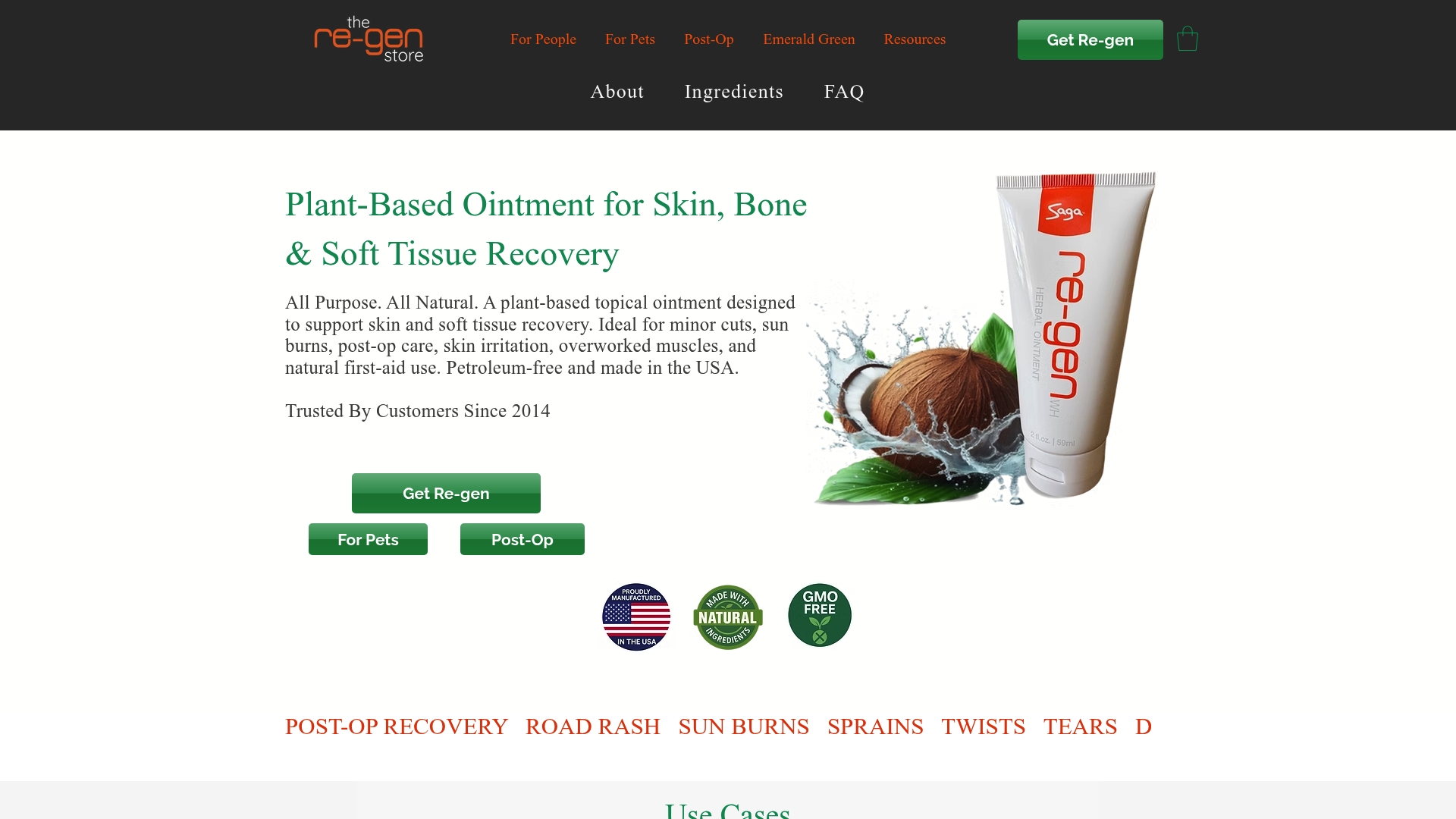
Whether you’re recovering from a procedure or looking for faster surgical recovery) support, Re-gen is formulated with natural ingredients that align with the evidence reviewed in this article. For pet owners, the store also carries pet-safe plant wound care options verified for animal use. Browse the full product range at TheRegenStore.com and find the right solution for your healing needs, backed by real ingredients and transparent information.
Frequently asked questions
Are natural healing remedies safe for pets?
Most botanicals are safe for pets when used under veterinary guidance and tailored to the animal’s specific needs. Research confirms that calendula and aloe promote keratinocyte proliferation in canine wounds, making them effective options when properly applied.
Which natural healing remedy works best for diabetic ulcers?
Honey, propolis, and aloe vera have proven antimicrobial and tissue-regenerating effects for diabetic foot ulcers. Clinical evidence confirms that bee products and aloe support wound healing through multiple mechanisms, including reducing infection and stimulating new tissue growth.
Is there strong scientific evidence for herbal post-surgical remedies?
Clinical studies show modest benefit for arnica, bellis, and bromelain, but evidence is mixed compared to skin remedies. NCCIH highlights inconsistent evidence for many herbals, making it important to review individual study quality before relying on any single remedy.
How can I tell if a natural healing product is evidence-based?
Check for randomized controlled trials, published peer-reviewed results, and endorsements from medical or veterinary experts. If a product cannot point to published clinical research, treat its claims with caution.
Are bee product and plant-based remedies suitable for daily first aid?
Yes, honey, aloe, and propolis are effective for minor wounds and safe for daily use on skin when applied appropriately. Research confirms that bee products support healing through antimicrobial and anti-inflammatory pathways, making them practical choices for everyday wound care.
Recommended
Comments